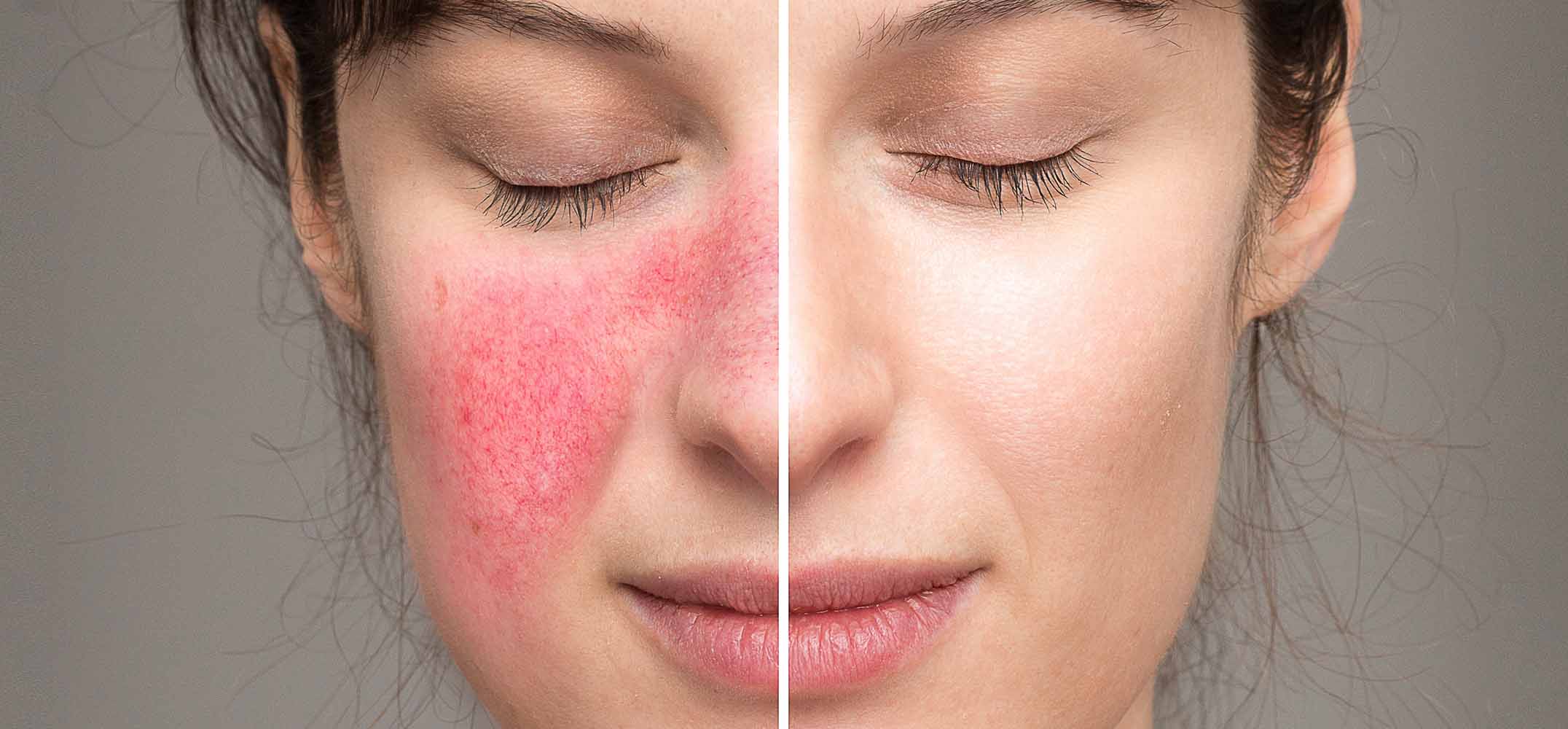
Rosacea is a really nasty skin disorder affecting the curves and features of the centre of the face. It is often called acne rosacea.
It’s generally characterised by one or more of the following:
- Light to heavy facial flushing (erythema) which can be transient or permanent
- Papules and pustules
- Telangiectasia – threadlike red lines or patterns that cross the face
- Rhinophyma – where the nose thickens and becomes bulbous
Women of 30-50 are most often victims of this condition, and find it frustrating and embarrassing to deal with for obvious reasons. Allopathic treatments like cortisone and antibiotics are often used to treat it, but this doesn’t solve the problem in the long term.
While its cause is supposedly unknown there are a number of factors which are known to trigger it including:
- Leaky gut syndrome (your gut flora are responsible for more than you know!). This one is the most obvious of all
- A mite that lives on the skin
- Poor diet and fizzy drinks
- Sugar/insulin dysregulation
- Auto-immunity
- Low immune status
- Various pathogenic bacteria living in the gut
- Helicobacter pylori (a germ that lives in the stomach)
- Some fungal infections (gut and on the skin)
- Alcohol is a known trigger if you are genetically predisposed
Sometimes rosacea appears in people with autoimmune conditions like Rheumatoid Arthritis, Diabetes type 1, multiple sclerosis, Crohn’s, ulcerative colitis and celiac disease, and is sometimes considered an auto-immune condition. However the ‘cause’ which makes the most sense, and where we’ve seen the best results, is in treating the gut and using supplements. Dysbiosis and gastrointestinal disorders in people lead to increased prevalence of the problem, and almost everyone we’ve ever seen with rosacea has leaky gut. Once this is addressed, the problem can be very efficiently controlled with a few basic nutrients.
Natural treatments
Clearly the GUT has to be addressed. Pathogenic bacteria may be assessed via a sophisticated stool test if you can afford it (not your regular lab). But if you don’t want to do this there is plenty you can do on your own. Some of these measures include:
- Dietary modification: this is absolutely essential if you want to beat it! NO more seed oils, margarine, gluten, dairy products other than butter, sugar, fructose, fizzy drink, alcohol, soya or processed food. Yes, it’s hard to start with, but so worthwhile
- Include healthy meats, eggs and other animal protein from grass-fed humanely reared animals. B12 is a KEY nutrient in dealing with rosacea. Get it from animal protein first and foremost.
- Eat more liver and eggs for vitamin A (vitamin A is only found in the animal kingdom and is not efficiently converted from beta-carotene to vitamin A in the body). This is one of your main ‘skin’ nutrients.
- Make sure your sugar and insulin levels are normal and that your homocysteine is low (blood tests will confirm this).
- Take a very good probiotic – MaxiProbiotic is an excellent one (from our online store)
- Take a good PREbiotic too – like MaxiPrebiotic – to allow effective implantation of probiotics – this takes time, and you need to keep up addressing the gut
- Take a good Vitamin B12 (methylcobalamine) under the tongue – every day
- Take a good B Complex daily as well – many B vitamins are missing in this condition and the condition responds well to a good B complex
- Make sure you are NOT trying to ‘alkalise’ your body! Forget the pH myth – it won’t do you any favours
- Pure Hydrolysed Collagen has a remarkable effect on skin
- MaxiMSM is also known to make a huge difference to the skin in a short time like collagen
- Zinc is a skin-specific nutrient and also encourages stomach acid production, and regulates insulin production. It is a fundamental nutrient in cell-mediated immunity and is an anti-inflammatory.
- Magnesium citrate is good for a number of things, but in this case for regulation of blood sugar if your problem is in this area – high blood sugar and insulin are VERY inflammatory and will drive this condition out of control
- Take 1000iu Vitamin D3 daily (make sure it’s D3 and not D2) – excellent for skin and has been shown to be effective in both rosacea treatment and autoimmune diseases. Direct sunlight can irritate rosacea, so in this case a supplement is much better than the sun itself
- Omega-3 fish oil has been shown to help in dealing with the inflammation of rosacea as it acts by competitively inhibiting pro-inflammatory pathways – take a higher dose than usual if your skin is very greasy
All of the above are available from our online store here.