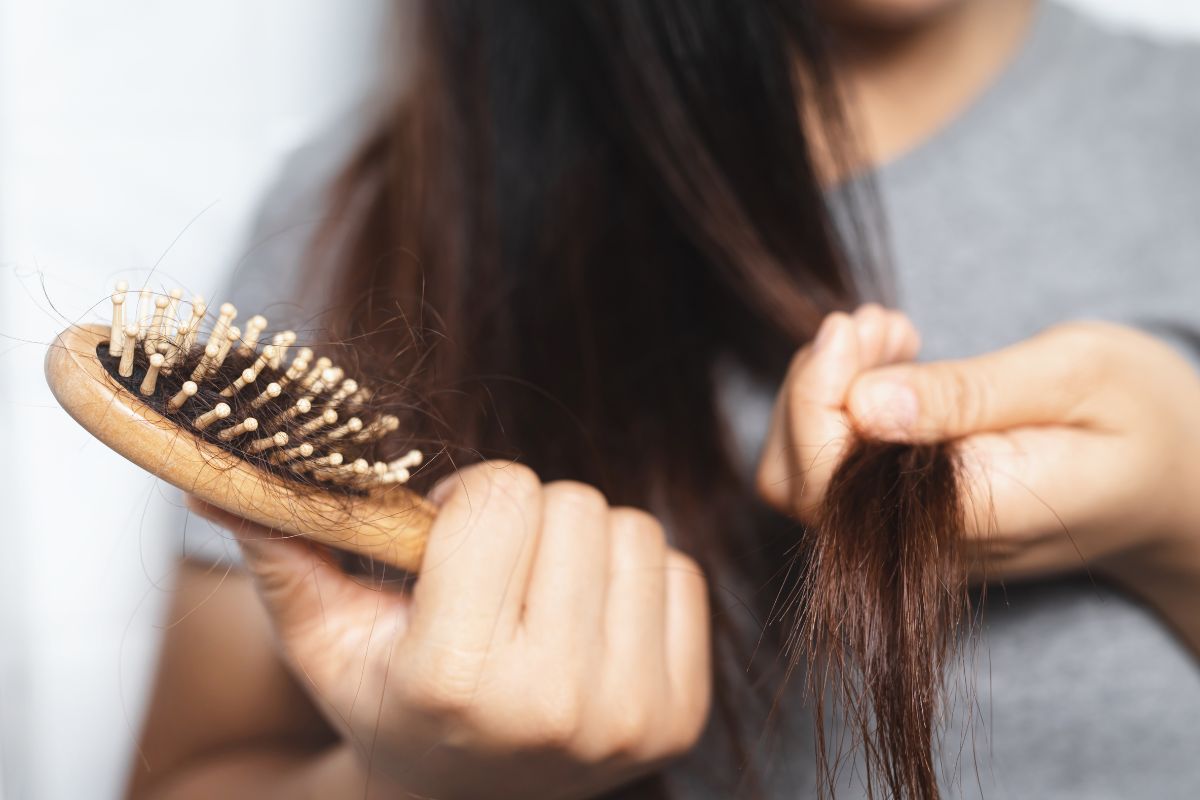
Losing hair is distressing in a way that goes beyond vanity, it can feel like your body is signalling that something is off. The good news is that in most cases, there are addressable reasons and once you find them things can most certainly improve.
Hair loss in women is rarely caused by just one thing. It is worth approaching it with curiosity rather than panic, and always asking: what might my body be trying to show me?
Common reasons women lose hair
Nutrition first
Low protein intake is one of the most overlooked contributors, particularly in women who eat very little animal protein or have been restricting calories. Hair is made almost entirely of protein, and your body will deprioritise hair growth when resources are limited. Low-fat diets are similarly problematic, as healthy fats are essential for hormone health and scalp integrity.
Iron, B12 and nutrient stores
Anaemia and low ferritin are among the most common and most correctable causes of hair shedding. If you have heavy periods, feel exhausted or eat little to no meat, this is worth looking into, especially if you have pale inner eyelids.
Ask your doctor for ferritin, a full blood count including haemoglobin and C-reactive protein (to rule out infection, which can show raised ferritin levels), as well as vitamin B12 and not just a general iron test.
Thyroid and hormones
Thyroid changes, including raised thyroid antibodies, are a common and often missed cause of hair loss. Hormonal shifts including perimenopause, menopause, PCOS (also now referred to as PMOS) or changes in contraception, also play a significant role. Hormones in birth control can affect hair both during use and after stopping.
Blood sugar and insulin
In PCOS/PMOS-type patterns, high insulin and androgen levels (androgens are male sex hormones that women also produce naturally; in excess, they can shrink the hair follicle and shorten its growth cycle) directly affect the hair follicle. Addressing blood sugar regulation is an important and often underestimated part of the picture.
Stress, sleep and life events
The body treats hair as non-essential during periods of high stress, illness, poor sleep or major life upheaval. Shedding that follows a difficult period by two to four months is very common and is usually temporary. If you experienced a stressful event, illness or surgery and noticed hair loss some weeks later, this is likely the reason.
Inflammation
A diet high in sugar, ultra-processed foods and inflammatory oils can affect hair follicle health over time. This is one area where dietary change can really move the needle.
Your hair routine matters too
Not all hair loss starts from within. Sometimes the answers are closer to the surface.
Heat styling
Repeated use of blow dryers, straighteners and curling irons at high temperatures weakens the hair shaft over time, leading to breakage that can look a lot like shedding. The hair is not falling from the root, it is breaking along the shaft. Lowering the heat setting, using a heat protectant and allowing your hair to air dry where possible makes a real difference over time.
Tight hairstyles
High buns, tight ponytails, braids, cornrows and extensions that pull continuously on the hairline or scalp can cause a specific type of hair loss called traction alopecia. The follicle is repeatedly stressed by tension until it eventually stops producing hair. If you regularly wear your hair tightly pulled and notice thinning around the hairline or temples, this is worth reconsidering. Caught early, it is reversible. Left long enough, the follicle damage can become permanent.
Aggressive brushing
Brushing wet hair causes significantly more breakage than brushing dry hair, as wet hair is elastic and far more vulnerable to mechanical stress. If you brush immediately after washing, switching to a wide-tooth comb and working from ends to roots rather than roots to ends can noticeably reduce breakage over time.
Hair products and chemical treatments
Frequent colouring, bleaching, perming and chemical relaxing all weaken the hair shaft. Sulfate-heavy shampoos can strip the scalp of its natural oils, disrupting the environment the follicle depends on. Overuse of dry shampoo, particularly as a substitute for washing, can clog follicles and impair scalp health over time. This does not mean you cannot colour your hair. It means spacing treatments, choosing gentler formulations and giving your scalp the care it needs in between.
A food-first foundation
Before anything else, make sure you are eating enough. Enough protein, enough healthy fat, enough colour and variety in your vegetables. Skipping food groups, under-eating or over-restricting carbohydrates can all contribute to hair loss and no supplement will fully compensate for an inadequate diet.
Prioritise whole, nutrient-dense food before reaching for anything else. It is the foundation everything else builds on.
Supplements worth considering
These are not quick fixes and individual needs vary. But where diet alone is not enough, or where specific deficiencies are confirmed, the following can meaningfully support hair health:
Pure Hydrolysed Collagen: provides the amino acids that support the scalp, skin and connective tissue. One of the most impactful additions for many women, particularly those whose protein intake is insufficient.
Biotin (B7): a B vitamin that supports keratin production. Worth considering where intake or status is low.
Magnesium Citrate or Chelated Magnesium Premium: supports stress resilience, nerve health and insulin regulation. Chronically low magnesium affects many systems that indirectly impact hair.
Zinc Picolinate: supports normal hair growth, skin, immune function and tissue repair.
Berberine Complex: particularly useful where blood sugar imbalance and insulin resistance are part of the picture, as is often the case in PCOS or PMOS-type patterns.
Gentle Daily Iron: worth considering if your ferritin is confirmed low. Iron deficiency is one of the most common and most correctable causes of hair shedding in women
Omega-3: healthy fats are not optional when it comes to hair health. Omega-3 fatty acids support scalp health, reduce inflammation around the hair follicle and play a role in the hormonal environment that hair growth depends on. If your diet is low in oily fish such as sardines, mackerel or salmon, or seeds such as chia and walnuts, a supplement with good DHA and EPA levels is worth adding.
One last thing
Hair growth takes time. Even when you are doing everything right, it can take three to six months before you notice regrowth, because hair grows in cycles, and the follicle needs time to recover. Be patient with the process.
And always remember, worsening or sudden hair loss deserves your time to investigate. The information above is supportive, but works best alongside an accurate understanding of what is actually driving the shedding. Blood tests, history and a conversation with your doctor or a caring health professional are always where to start.
Hair’s to you! ❤
References
1. Thamotharan N, Harikumar MV, Sundaram M, Swaminathan A, Rangarajan S. Assessment of Serum Ferritin Levels in Female Patients With Telogen Effluvium. Cureus. 2025. doi:10.7759/cureus.100249. pmc.ncbi.nlm.nih.gov/articles/PMC12839778
2. Larrondo J, McMichael AJ. Traction Alopecia. JAMA Dermatology. 2023;159(6):676. doi:10.1001/jamadermatol.2022.6298.
3. Sunil M, Zacharia M. Clinical profile of female patients with chronic telogen effluvium and its association with serum ferritin level. Asian Journal of Medical Sciences. 2024;15(12):98–102. doi:10.3126/ajms.v15i12.70630.
4. Karadag AS, Bilgili SG, Onder S, et al. A comprehensive investigation of biochemical status in patients with telogen effluvium: Analysis of Hb, ferritin, vitamin B12, vitamin D, thyroid function tests, zinc, copper, biotin, and selenium levels. Journal of Cosmetic Dermatology. 2024. pmc.ncbi.nlm.nih.gov/articles/PMC11626366
This article is for educational purposes only and is not intended to replace medical advice. If you are experiencing hair loss, please consult a qualified healthcare practitioner who can investigate the underlying cause and advise accordingly.