
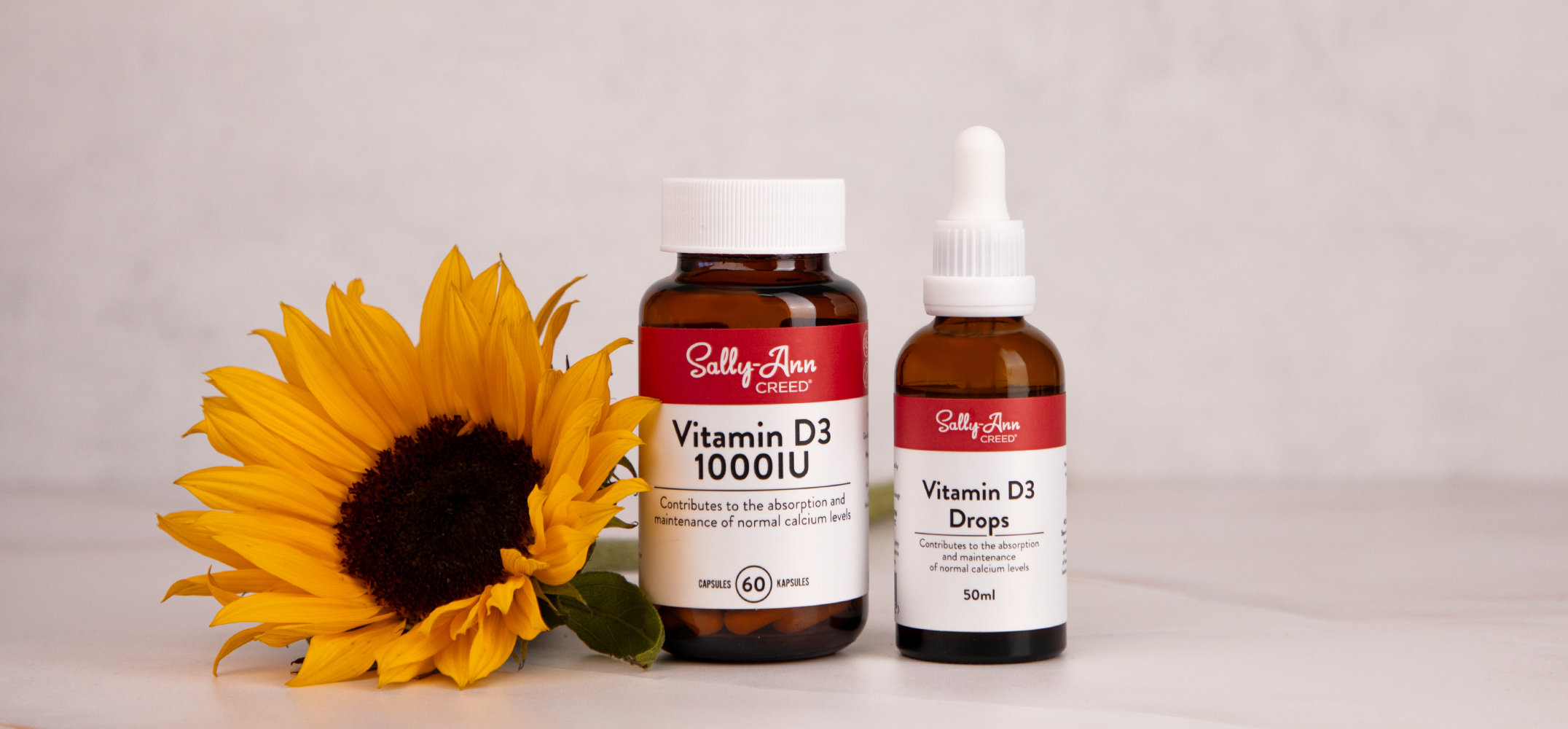
We are thrilled to have recently announced the launch of our new Vitamin D3 drops. Not only do they make getting your daily dose of Vitamin D3 easier, but it also comes with no distinct taste, making it a quick and enjoyable part of your supplement regime.
As excited as we are, we also know the number one question you may be wondering… which Vitamin D3 option is best for me, the drops or the capsules?
Below we have listed some of the benefits of each, helping you to make an informed choice as to which option is best for you.
Vitamin D3 is a crucial nutrient that helps regulate calcium and phosphorus absorption in the body, supporting bone, hormone and teeth health. The main difference between Vitamin D3 capsules and Vitamin D3 drops lies in their formulations and methods of consumption.
- Formulation: Vitamin D3 capsules typically contain a dry form of the vitamin, which is encapsulated in a solid shell. Our D3 capsules are made using a bovine gelatine capsule. On the other hand, Vitamin D3 drops are formulated as a liquid solution. Our new D3 drops are suspended in a water base. You can view the full ingredients list of each below:
Ingredients (capsules): Bovine gelatine capsule, vitamin D 1000IU, magnesium stearate, microcrystalline cellulose
Ingredients (drops): Aqua, vitamin D3 (cholecalciferol), sodium benzoate, potassium sorbate - Administration: Capsules are meant to be swallowed whole with water or other fluids. They are designed to dissolve in the stomach, releasing the Vitamin D3 for absorption into the bloodstream. Drops, as the name suggests, are administered by placing a specific number of drops onto or under the tongue, allowing for absorption through the mucous membranes in the mouth and directly into the bloodstream.
- Absorption Rate: Both Vitamin D3 capsules and drops can be effectively absorbed by the body. However, the absorption rate may vary slightly. Drops, when placed onto or under the tongue, may be absorbed more quickly due to the rich network of blood vessels in the mouth area. Capsules, on the other hand, need to pass through the digestive system before the Vitamin D3 can be absorbed.
- Dosage Accuracy: Drops provide a greater level of control over dosage compared to capsules. Each drop typically contains a specific amount of Vitamin D3 (1ml is equal to 1000IU), allowing for precise dosing. Capsules, on the other hand, come in pre-measured amounts, and it may be difficult to adjust the dosage as precisely as with drops.
- Convenience and Portability: Capsules are generally more convenient for travel or when on the go since they are pre-packaged and easy to carry. Drops, on the other hand, may require more careful handling to ensure accurate dosage and prevent spills or leaks.
It’s worth noting that the choice between capsules and drops often comes down to personal preference, ease of use, and any specific recommendations from your healthcare provider. It’s always a good idea to consult with a healthcare professional to determine the most suitable form and dosage of Vitamin D3 supplementation for your specific needs. We also, always recommend that you have your Vitamin D levels checked every 3 to 6 months as it is a fat soluble vitamin that can build up in your system over time.