
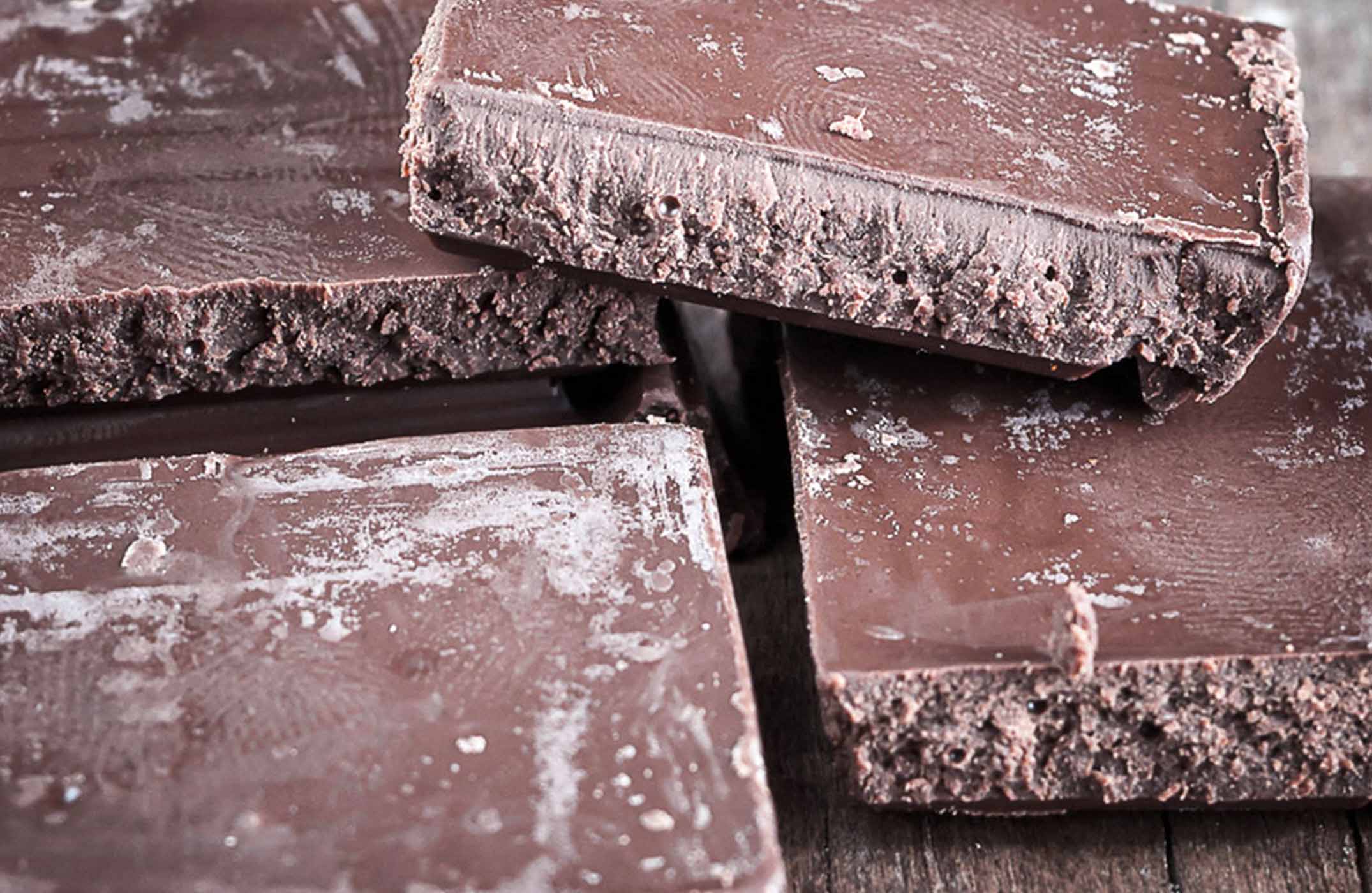
Have you ever opened a chocolate bar and noticed a white layer over the surface of your chocolate or little, granular white specks? This is a common phenomenon, and is known as Chocolate Blooming. The good news is that it has little to no effect on your chocolate bar, other than making it slightly aesthetically ‘different’ to your standard, brown chocolate bar look and feel.
There are two types of chocolate bloom, one referred to as Fat Bloom and the other is known as Sugar Bloom.
Fat Bloom
Fat bloom – the most common type of bloom – is a result of a change in temperature in your chocolate, or poor tempering during manufacture. It occurs most often when a chocolate melts and then re-solidifies. A good example of this is when one accidentally leaves a chocolate in the car for a few days, and then opens it. You will note a white discolouration across the surface of the bar. The warmer temperature heats the cocoa butter in the chocolate, which causes it to soften and separate from the rest of the ingredients in the bar. The chocolate then re-solidifies, once the temperature cools, and this creates the fat bloom effect – a slick white layer across the surface of your chocolate. Our Sally-Ann Creed® 70% Dark Chocolate would be susceptible to this effect if left in heat for too long.
Sugar Bloom
Sugar bloom is most recognizable by the hard, dry, granular crystals that develop on the surface of your chocolate bar. There is a noticeable texture change over the surface of the bar, where little crystals have formed. When chocolate is exposed to moisture, the sugar within the chocolate absorbs this moisture and dissolves the crystals. The sugar rises to the surface and forms small, hard granular lumps.
How does one avoid Chocolate Blooming?
Fat bloom can generally be avoided by ensuring that the chocolates are tempered sufficiently during manufacture, and are thereafter kept at a consistent, room temperature. With sugar bloom, the sugar crystals react to moisture exposure. By avoiding damp storage conditions, such as in the refrigerator or areas with high humidity, you can help prevent this reaction from occuring which results in the crystals dissolving and coming to the surface.
To repair chocolate bloom, one can melt the chocolate down, stir the melted mixture and then pour into molds and allow to cool. This will bring the fat or sugar back into the original mixture, and remove the aesthetic discolouration.
But can I still eat my chocolate?!
Yes, you most definitely can! Fat and sugar bloom have no effect on the nutritional aspects of your chocolate, only a slightly negative effect on the appearance, due to the discolouration. The product remains perfectly safe for consumption.