Articles


Is Collagen safe in Pregnancy & Breastfeeding?
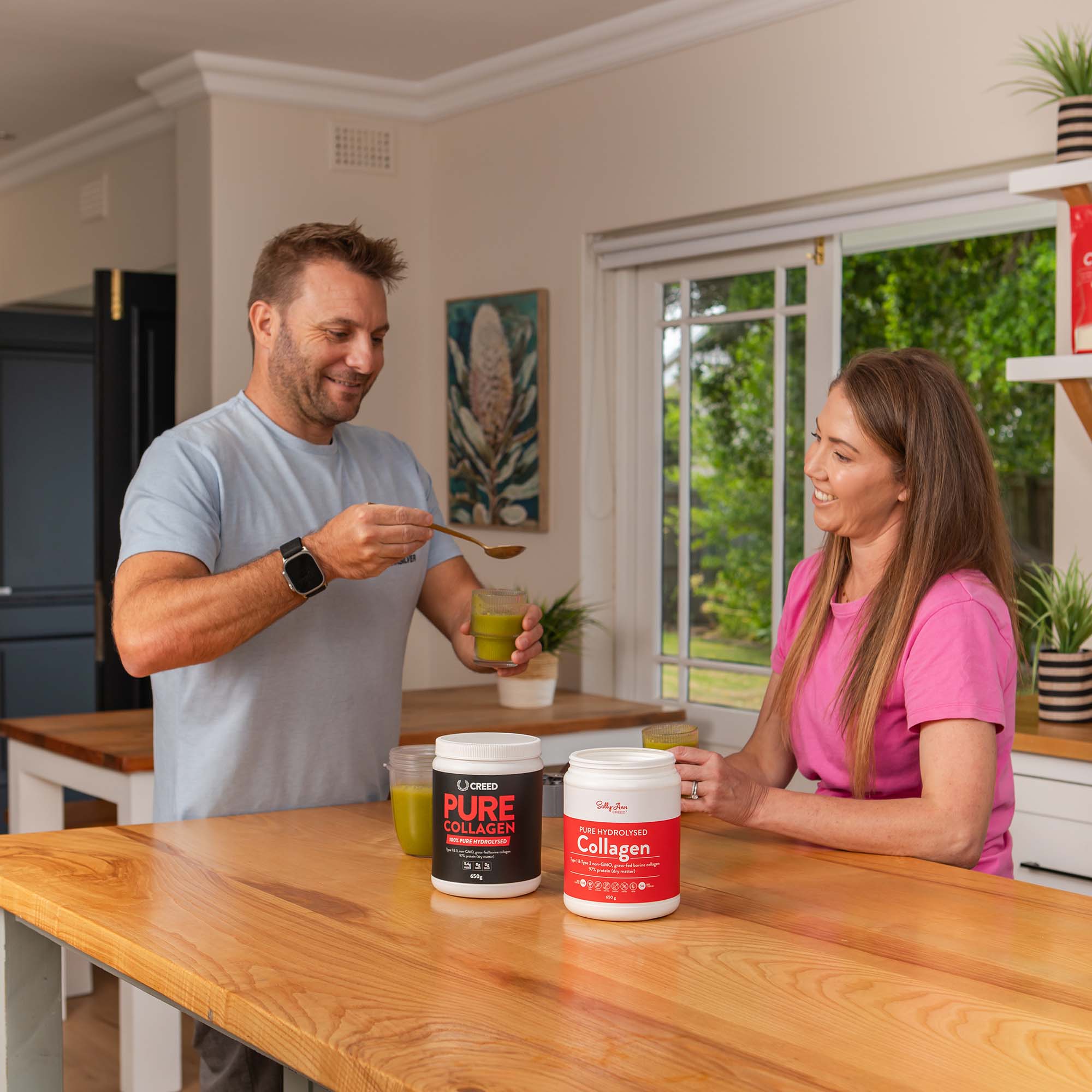
I get asked this almost every day, so I hope this helps someone. If you are hesitant in pregnancy regarding anything at all, please chat to your doctor. However, taking a pure collagen supplement is no different to consuming several bowls of bone broth a day. This is often indicated in pregnancy and practiced by many people groups around the world and has been for thousands of years. Pure collagen is a wonderful adjunct to pregnancy. Please note here I say PURE – if the collagen has got ANYTHING added to it whatsoever, my advice is NOT to take it in pregnancy. There are many chemicals added to some collagens, please please protect your baby from them. Also, do NOT take marine collagen or fish collagen in pregnancy – it may result in you or your baby developing severe and even life-threatening fish allergies. My strong recommendation is the bovine collagen (like my Pure Hydrolysed Collagen, grass fed) as this is the most abundant in the body and in my opinion the safest. I would be nervous of pork and marine collagen at this time. In pregnancy and breast feeding, collagen may help with the following: • Prevent or remove stretch marks in pregnancy. Skin will retain its elasticity while also helping to repair skin and also to help new skin cells to form. • Pure collagen powder is one of the best ways to prevent stretch marks during pregnancy and also to help your body and skin to recover postpartum • It keeps your skin ‘elastic’ so it will bounce back after birth • Very often general discomfort and aches and pains can be greatly helped by collagen at this time • Aches and pains happen in pregnancy because your body produces relaxin which helps your joints to relax while giving birth. This weakens joints and they are more prone to injury. You might also have various aches and pains that just get worse as the weight of your baby increases. Collagen will strengthen your joints, helping to alleviate aches and pains, while also protecting your joints against injury. • Cleanses toxins from the body, supports liver function • Relieves joint and muscle pain • Prevents hair loss in pregnancy and keeps nails strong • Helps mood swings, increases concentration • Helps with constipation • Can prevent skin discolouration in pregnancy • Collagen not only assists in building new bone but it also helps to strengthen bone • Low energy levels are common in pregnancy and breastfeeding. Collagen provides extra energy for childbirth, and it will provide healthy breast milk for your baby afterwards. • Collagen can help the body repair itself after the baby is born, keep your metabolism high and boost energy levels. • Digestion is often a problem in pregnancy, and this is another benefit of taking collagen for its gut-healing properties. It helps to draw water into the intestines to help move the food along, another reason it helps with constipation as well • Pregnancy puts strain on your liver. The glycine in collagen help the breakdown and excretion of toxic substances by the liver. Warning: be careful of FISH or MARINE collagens when pregnant – and be careful not to eat shellfish in pregnancy. Don’t take collagen in tomato, grape or apple juice as it can weaken the strength of the collagen. Please always check everything with your doctor, concerning anything and everything you take during pregnancy. This post is for information only and not meant to treat or be used as medical advice. My Pure Hydrolysed Collagen is 100% bovine collagen with nothing added, and you can get it from the SHOP button at sallyanncreed.co.za. Disclaimer: You can simply click on the name of each product mentioned above (in bold) and a hyperlink will take you directly to the product for an easy purchase. Originally published on https://www.facebook.com/SallyAnnCreedSA/ in 2020.
Read more
CAN YOUR LIVER AFFECT YOUR THYROID?
Absolutely! Firstly, remember the inactive T4 hormone made by the thyroid needs to be converted by the liver. It is converted into the active form – T3. So if your liver is not in good nick, you may find your thyroid is somewhat sluggish. Improving liver & gut health is the first step to improving thyroid health. The thyroid gland affects metabolic rate and while the body provides glucose for energy from food – if you are exercising or haven’t eaten for a while – your liver is responsible for supplying the glucose. This glucose is needed for maintaining normal blood sugar levels from its glycogen stores. In order to make glycogen the liver needs the thyroid to ‘tell’ it to do so. First, the pituitary gland secretes thyroid stimulating hormone (TSH). This signals the thyroid to make T4 which then goes to the peripheral tissues such as l liver, kidneys and muscles. This is where it is converted to the active form of thyroid hormone called T3. Without enough T3 you won’t get that much glycogen. Which means you will experience low blood sugar (hypoglycemia) and very poor phase 2 detoxification by the liver. Disclaimer: You can simply click on the name of each product mentioned above (in bold) and a hyperlink will take you directly to the product for an easy purchase. Originally published on https://www.facebook.com/SallyAnnCreedSA/ in 2020.
Read more
Antibiotics do more than kill bacteria - They stop nutrient absorption too
Antibiotics kill the bacteria that are causing illness by bursting bacteria cell walls, and destroying the proteins and DNA that keep the bacteria alive. Unfortunately, they also kill the good bacteria in your gut that you need for healthy digestion, and interfere with your body’s ability to absorb some critical nutrients. While there are hundreds of different antibiotics, most can be grouped into six classes that treat different conditions: Penicillin Cephalosporins Aminoglycosides Tetracyclines Macrolides Fluoroquinolones Each of these medications is used to kill different bacteria in different parts of the body, each interacting differently with nutrients in your diet and supplements – some more devastatingly than others. They can interfere with your ability to absorb critical vitamins and minerals, which can lead to additional health problems and nutrient deficiencies. They kill gut bacteria – both good and bad and all antibiotics have this effect. INTERACTIONS There are MANY, but here are 3 examples: TETRACYCLINE (usually used for acne) can block absorption by binding with minerals such as calcium, magnesium, iron and zinc in the GI tract. Taking Vitamin C with tetracycline may increase levels of the antibiotic, but the antibiotic may decrease the effects of Vitamin C in the body. It interferes with vitamin B activity and absorption – and likewise the other way round. So take them away from each other. This particular drug is very damaging to the liver. Using these antibiotics in the long-term can lower the body’s levels of B2, B9 (folic acid), B7 (biotin), B6, and B12. The University of Michigan Medical School (UMMS) recommends that people taking tetracycline for longer than two weeks ask their doctors about supplementation. NEOMYCIN interferes with B-12 and folic acid activity by decreasing absorption or increasing elimination. UMMS recommends supplementing if taking neomycin for more than a few days. CEPHALOSPORINS reduce Vitamin K absorption. But essentially they ALL can have long-term side-effects which can be devastating. OUR ADVICE IS AS FOLLOWS: AVOID them if you can!!! Use instead the highly effective “protocol” of AV/AT and AntiBiobotanical with PLENTY of Vitamin C like we do, to avoid antibiotic use. They work as well without the damage to the gut and to the liver. (You will find these all at https://sallyanncreed.co.za/shop Take a good probiotic anyway, like MaxiProbiotic. Don’t be too quick to take antibiotics unless you are seriously infected. Get bed rest and change your diet if you get frequent infections. Read 63 DAYS TO OPTIMUM HEALTH on how to remain healthy. That’s the key STAYING HEALTHY! A healthy body will avoid most disease, viruses and other ills. It’s your ‘health insurance’ You can get AntiBioBotanical, AV/AT, Vitamin C, MaxiProbiotic, and 63 Days to Optimum Health from our online store at https://sallyanncreed.co.za/shop.
Read more
Time to Ditch the Boxed Cereals
It’s pretty scary – you will find entire aisles devoted to ‘dead’ food in the supermarket, one of the biggest and longest aisles is usually the cereal aisle. Do you have any idea how toxic these so-called ‘healthy breakfasts’ are? Sure, they are touted as slimming aids, promise boundless energy, supposedly supply nutrients to growing children and appear from adverts to be an absolute daily essential for all ages. Sorry but this is far from the truth. The healthiest part of that boxed cereal is the box itself, I really mean it. Have you ever read what’s on the back of a cereal box? No? Let me enlighten you then. Here are a few of the ingredients in cereal boxes (and I mean a few) – I have several cereal boxes here (I bought them, tossed the contents in the bin, & kept the boxes for my research): Sugar (usually the first item on the list) – more sugar than you can imagine! Wheat bran and wheat variants (very bad for the gut) Added gluten (if you don’t know yet, gluten’s not good for you!) “Flavouring” features heavily – these are chemicals, not real flavours TBHQ – a carcinogenic “antioxidant. No, this is not an antioxidant – it simply prolongs shelf life (not your life), it’s not safe – and is one of many such ‘antioxidants’ Very many “E” numbers, which almost always signal chemical additives Vegetable fat/palm fat (hydrogenated or not, this is ghastly for the arteries and lungs) Malt (more sugar) – and is in so many products Plenty of maize (GMO and not good for the body, nor is it nutritious) Loads of soya (don’t even get me started on soya…but this too is GMO) Lots more, check them out yourself next time you wander down the ‘cemetery’ aisle Cereals also have carbohydrate and calorie counts through the roof, so don’t be surprised if your scale disappoints you next time you weigh yourself if you are a serial cereal eater (sorry, couldn’t resist that ). In some cereals, you are getting 12-17+ teaspoons (or the equivalent) in sugar per serving as well as all the other gunk and chemicals. Another disturbing thing is that the maize and soya (bad enough on it’s own) is genetically modified in this country. The so-called “vitamins” added are in such miniscule amounts (and almost 100% synthetic) that a flea would not benefit from their intake. Cereal puffs, flakes, and shapes made in factories are subjected to such intense pressure and heat that they actually liquefy into a slurry. This slurry allows the grains to be easily shaped into puffs, flakes, and other shapes that make each cereal distinct, before soaking it in sugar and chemicals. But at the end of the day, it’s all the same gunge. The manufacturing process used to make boxed cereal is called extrusion – if you want more eye-popping information on the food industry and extrusion, look here. Just make sure you’re sitting down first. This process is so violent and denaturing that the proteins in the grains are actually rendered toxic and allergenic by the process itself. Don’t think “organic cereal” is any different – it’s not. Sugar is sugar is sugar. And don’t forget, cereals are heavily treated, processed ‘food-like’ products – they are not classed as real, whole food. If you don’t feel like egg and bacon every day, here are a few other ideas: Good old-fashioned egg and bacon is still a very healthy meal by the way, with a few tomatoes, even a piece of steak from last night’s dinner, mushrooms etc – you won’t even think about food the rest of the day Make a healthy wrap (use an egg in a pan to form a ‘wrap’) fill with your choice of mushrooms, chicken livers, salmon, rocket, etc. Or use a healthy wrap you’ve made. Nothing wrong with leftovers from last night either – there are no rules! Make a healthy smoothie with blueberries, homemade almond milk, Pure Hydrolylsed Collagen or Whey Protein Isolate, walnuts or pecans, chia seeds, pumpkin seeds, a touch of honey, and some BarleyLife powder or a green powder of your choosing. If you absolutely must have cereal. Make your own Swiss Bircher Muesli or similar, grate in an apple and you have a delicious cold brekkie. Eating a whole food breakfast sets your blood sugar on the right path daily. Your health is too important to pour damaged/junk food down your or your children’s throats. Our precious bodies are worth caring for. Treat yours well and you will reap the benefits. Disclaimer: You can simply click on the name of each product mentioned above (in bold) and a hyperlink will take you directly to the product for an easy purchase. Originally published on https://www.facebook.com/SallyAnnCreedSA/ in 2020.
Read more
ADRENAL FATIGUE
In spite of the pandemic of people suffering from adrenal fatigue, there is still no official ‘diagnosis’ or even recognition in the medical community, whereas natural health practitioners recognize it as adrenal insufficiency or ‘burnout’ due to chronic stress. Your adrenal glands are two tiny walnut-shaped glands witting on top of your kidneys but they are responsible for an enormous amount of hormone production for everyday biological functions. One such hormone is cortisol, referred to as our ‘stress hormone’ although it’s only one of many. Unchecked stress results in constant high levels of cortisol, overloading the adrenal glands and resulting symptoms typically include (among others): • Anxiety • Chronic fatigue • Digestive issues • Headaches • Sleep disorders/insomnia • Increased risk for heart disease • Low thyroid function • Weight gain and inability to lose weight • Problems with concentration and memory • Reproductive problems • Autoimmune conditions • Hair loss • Brain fog • Low libido • Depression • Muscle loss • Weight gain Stress can be psychological, physical or emotional by nature – they all affect adrenal function. Some of the things you might not associate with stress per se include: • Lack of sleep and insomnia • Poor diet and too much/not enough exercise • Environmental toxins and pollution • Financial hardships • Negative relationships • Death of a loved one • Stress at work WHAT CAN YOU DO? 1. Eat healthily for a start – this is half the battle won – eating lower carb is healthier – and dump the sugar and seed oils 2. Eat more animal protein – protein supports adrenal function – get enough animal protein 3. Dump the junk food/processed food etc (and wheat!) 4. Take some smart supplements like Super Cee and Pantothenic Acid daily 5. Get plenty of REST and start saying NO to people who drain you 6. Use my Pure Hydrolysed Collagen – it really gives a fantastic boost! 7. You must have magnesium citrate – this also helps enormously This is just a start! Wishing you a speedy recovery! You’ll find all these top quality products in my online store https://sallyanncreed.co.za/shop – and it’s worth trying to live according to my latest book, 63 Days to Optimum Health (also from my online store). Disclaimer: You can simply click on the name of each product mentioned above (in bold) and a hyperlink will take you directly to the product for an easy purchase. Originally published on https://www.facebook.com/SallyAnnCreedSA/ in 2020.
Read more
Berberine Complex for so much more than weight loss
Berberine is one of the most exciting natural products in current medical research and has nothing short of amazing properties. Other than for weight loss, it’s a powerful: Anti-viral Anti-inflammatory Anti-bacterial Berberine is most commonly taken for Weight Loss Powerful anti-ageing properties on skin Anti-inflammatory for skin and entire body High Blood Pressure Diabetes Dysglycaemia Reduces Insulin Levels High Cholesterol Polycystic Ovary Syndrome Some studies say it’s much better than metformin. AND you can take it WITH metformin if you wish – it seems to work synergistically for even better glucose control. It greatly improves muscle insulin sensitivity, and promotes blood glucose and fatty acid uptake into muscle cells. It also improves metabolism and mitochondrial function leading to a cascade of health benefits. So here are MORE new reasons people are taking it according to studies: Treating Fatty Liver Irritable Bowel Syndrome and SIBO Improves endothelial function – Heart Healthy Lowers cortisol (stress-reducing) Anti-depressant properties via increased serotonin production Who wouldn’t want to take it? Get it from https://sallyanncreed.co.za/shop – it’s called Berberine Complex Disclaimer: You can simply click on the name of each product mentioned above (in bold) and a hyperlink will take you directly to the product for an easy purchase. Originally published on https://www.facebook.com/SallyAnnCreedSA/ in 2020.
Read more
The magic of L-Glutamine
Why you’ll LOVE Glutamine: Encourages weight loss Dramatically curbs carb and sugar cravings! Intestinal repair, particularly leaky gut Helps bowel regularity Enhances mental clarity Improves overall digestion Improves nutrient absorption Helps calm stress Speedier recovery from exercise Faster recovery from operations Here are some other ways glutamine supports your body: Relieves muscle soreness (amazing for recovery from exercise) Athletic injuries Excellent in autoimmune conditions Helps chronic fatigue Prevents gas and bloating Prevents cachexia in cancer victims Controls diarrhoea and constipation Eliminates food sensitivities Helps eliminate rashes/hives Reduces/eliminates bad breath Improves absorption – prevents nutritional malabsorption Excellent for healing eczema, acne Good in Crohn’s disease, colitis Excellent in managing diabetes Helps adrenal fatigue Why wouldn’t you want to take it? Get it here – couriered to your door! Mine is the purest grade available in the world (there are many grades). Disclaimer: You can simply click on the name of each product mentioned above (in bold) and a hyperlink will take you directly to the product for an easy purchase. Originally published on https://www.facebook.com/SallyAnnCreedSA/ in 2020.
Read more
More vitamin D3 premium benefits:
Here are just a few more great benefits of Vitamin D3 Premium: Supports intestinal permeability and manages Zonulin levels Enables normal mineralization of bones and teeth Enhances insulin production and supports beta cells in the pancreas Supports emotional health and cognitive function There are too many to mention (see earlier post), but it’s nice to know more of the amazing benefits of Vitamin D3 – SO important for respiratory function too. Find Vitamin D3 Premium here https://sallyanncreed.co.za/shop/ Disclaimer: You can simply click on the name of each product mentioned above (in bold) and a hyperlink will take you directly to the product for an easy purchase. Originally published on https://www.facebook.com/SallyAnnCreedSA/ in 2020.
Read more
Are you collagen deficient?
In the same way that eggs ‘bind’ cake ingredients together when you make a cake, so collagen is the ‘glue’ or binding agent which holds your cells together so effectively. Collagen enables your skin to move flexibly, and to bounce back into place when you press it. Now – just imagine this glue “drying up” over time as it does as we age, and that’s precisely what starts happening once you get into your 30’s and 40’s. Eventually, you may not have enough collagen in your skin or joints to do the job which leads to all sorts of collagen-deficiency problems such as: Stiff, achy joints – have you ever walked up the stairs and your knees start cracking? Or when you stand up, your hips crack? If your bones crack frequently, you could be deficient in collagen. Wrinkles and fine lines start becoming evident – if you’re losing collagen, you’re losing the glue holding your body together. Your skin loses its elasticity, so fine lines and wrinkles begin to show in your face and hands. Unexpected weight gain – because collagen is LOADED with gelatine, a gut-healing nutrient, it heals the gut. Now if you have a leaky gut, you pack on the pounds so much easier, plus it’s that much harder for you to lose weight. Heal your inflamed gut with collagen to support weight loss. I highly recommend my unique non-GMO, grass-fed Pure Hydrolysed Collagen powder – or if you prefer capsules – my Beauty Bullets (collagen-filled capsules). Disclaimer: You can simply click on the name of each product mentioned above (in bold) and a hyperlink will take you directly to the product for an easy purchase. Originally published on https://www.facebook.com/SallyAnnCreedSA/ in 2020.
Read more
How to use our luxury bath salts
These wonderful Luxury bath salts contain Epsom salts and other salts which help the entry of magnesium into the cells but did you know that magnesium and other salts are not a salt at all, but rather a mineral compound used for centuries as a natural remedy for a number of ailments. Magnesium is readily absorbed into the skin, which makes it’s health benefits quickly accessible, providing: reduction of inflammation alleviates hardening of the arteries improves muscle and nerve function allows nutrient absorption to be much faster help to flush out toxins Here are some more uses for my Luxury Epsom Bath Salts: Soothes sore muscles and prevents cramps and joint pain To remain healthy and vibrant the salts help exfoliate the dead skin. Relaxation and relief from stress Exfoliates & softens skin Relieves constipation Draws out toxins Reduces swelling Kills foot fungus and removes odour Sunburn treatment You will also find these amazing Bath Scrubs have essential oils and moisturising oils. This will help you to exfoliate your whole body and then when you wash it off your skin will be amazingly smooth. Find them all here https://sallyanncreed.co.za/?s=bath&post_type=product. Elwynn Oberholzer “I simply love these bath salts! Luxurious and healing ❤️ “ Disclaimer: You can simply click on the name of each product mentioned above (in bold) and a hyperlink will take you directly to the product for an easy purchase. Originally published on https://www.facebook.com/SallyAnnCreedSA/ in 2020.
Read more
Power duo for sports, weight loss and anti-ageing
Two supplements are invaluable in this equation: Glutamine and Collagen! These two form the power duo for sports. Exercise causes a form of increased metabolic stress and quickly depletes glutamine in the body and if levels fall too low, it can have extremely damaging effects on the body. Pure glutamine is better than the sucralose, flavourants and other toxins added to sports supplements today. Glutamine supplementation can ward off the damaging effects of oxidative and metabolic stress in the following ways: Reduces muscle breakdown Helpful for calorie restricted diets (they increase muscle breakdown) Helpful for fat-burning Great for weight loss Builds muscle while burning fat Essential for glutathione production Shortens recovery time Improves recovery after surgery and during chemo Removes cravings for sweets, carbs, tobacco and alcohol (even some drugs) PURE HYDROLYSED COLLAGEN is a powerful supplement for athletes and couch potatoes alike. Mine is grass-fed, non-GMO PURE Hydrolysed Collagen which offers you the best chance to heal your gut, joints, improve hair and nails, and prevent/smooth out wrinkles. Best of all it keeps you young on the inside too. A few of collagen’s many benefits when taken daily supports: healthy connective tissue repair – offers optimal mobility healthy digestion and gut repair growth and health of hair, skin and nails cardiovascular health repairs joints and prevents joint pain repairs and prevents breakdown of joint cartilage, tendons, ligaments Find these at https://sallyanncreed.co.za/shop Disclaimer: You can simply click on the name of each product mentioned above (in bold) and a hyperlink will take you directly to the product for an easy purchase. Originally published on https://www.facebook.com/SallyAnnCreedSA/ in 2020.
Read more
The Four Stages of B12 Deficiency
The Four Stages of B12 Deficiency What people don’t know who decide to go to a 100% plant-based diet is that it’s fine for a while – the ADULT liver can store enough B12 to last anywhere from 1-5 years maximum. But after that you could be putting yourself at serious risk of irreversible damage. B12 is known as cobalamin because it contains the trace element cobalt not found in plant foods at all. It is made in the gut of animals and migrates from gut to muscle. A water-soluble vitamin, B12 is crucial to the brain, nervous system, red blood cell formation and DNA. The nervous system is particularly vulnerable to B12 deficiency. Myelopathy (degeneration of the spinal cord) is the most common neurological syndrome of B12 deficiency and is an early sign of stage 4 deficiency. If detected in time it is fully reversible. Young people can experience this as can older people. It could start with tingling in both hands and spread up the arms. You will only become aware of symptoms when you reach stage 4. Here then are the four stages: STAGE 1: You may not feel anything at this point whatsoever. STAGE 2: As stage one progresses to stage 2, low vitamin B12 can be detected at a cellular level. Like stage 1, there are no discernible symptoms. Nobody absorbs all the vitamin B12 they consume; meat eaters only digest and absorb about 50% of the B12 from meat and fish. Although vegetarians generally eat dairy foods and eggs, the quantity of B12 is quite low in these foods and the absorption rate is not that great. This would explain why they are frequently deficient in this vitamin but not to the same extent as vegans. Stage 2 requires that you take the right supplements. There are 2 forms of B12 – natural and synthetic. The type most commonly used in supplements is CYANOcobalamin. A synthetic form not found in nature. It is cheap so popular with manufacturers. The body has to convert it into METHYLcobalamin. This is the natural form. If you are taking a B12 supplement try to get methylcobalamin. Even oral B12 supplements are poorly absorbed. That’s why B12 supplements tend to be high-dose. For example, a typical oral dose of 1000mcg delivers around 5–40mcg of B12 so take it under your tongue daily. STAGE 3: At this stage there is a detectable change in the blood. Levels of homocysteine begin to rise above normal. This is creating a condition sometimes called ‘hyperhomocysteinuria’. It’s a see-saw situation. As B12 levels rise Homocysteine (Hcy) levels fall and vice versa. Don’t rely on ‘fortified’ foods either! Manufacturers of processed food add vitamin B12 so that they can make a big deal of this on the packaging which can be very misleading. Unfortunately fortification is usually made with extremely small amounts of the synthetic form of B12. STAGE 4: Now this is recognised as the clinical deficiency stage as more symptoms begin to manifest. Some of these are more serious than others, and some are more obvious than others. Early, mild symptoms of stage 4 vitamin B12 deficiency include: Fatigue Depression Anxiety Loss of appetite Paleness Hair loss Numbness or tingling in the hands and feet Poor memory Poor memory and cognitive function are the most commonly reported symptoms of B12 deficiency. Both blood and the central nervous system are likely to be affected now. Megaloblastic anaemia is not uncommon. A condition in which abnormal red blood cells are produced by bone marrow. A major concern is a form of myelopathy affecting the spinal cord called ‘subacute combined degeneration’ (SCD). Myelin sheaths and axons are destroyed in the white matter of the spinal cord. The myelin is the protective layer wrapped around the nerve. If caught early this is treatable. Another indication of stage 4 deficiency is depression. What You Can Do If you are at all concerned about your B12 status, there are two tests that are quite useful – blood (serum) vitamin B12 and homocysteine levels. The blood vitamin B12 test might show low levels indicating possible stage 1-3. If you have high homocysteine you are already at stage 4. We can assist you with these tests by filling out this form. SUPPLEMENT SUGGESTIONS INCLUDE: 1. Sally-Ann Creed Vitamin B12 here 2. B Complex here If you are at all concerned about either Hcy or B12, we strongly recommend taking both.
Read more