Articles


Gout
Just the word is enough to make you cringe if you have it or have had it. It can strike anywhere from your knees to elbows, ankles or fingers – but the most common place is the big toe or ankles. It’s excruciating, so I’m told. But there is hope! There are things you can do. MaxiMSM alleviates the pain and inflammation of the joints associated with gout (but may require several weeks of daily supplementation before its beneficial effects become apparent and keep it away). Around a teaspoon or two a day in water of the MaxiMSM powder is recommended, or 6-10 of the MaxiMSM tablets in divided doses. But do keep it up. Vitamin C alleviates gout (by facilitating the excretion of excessive uric acid). Take Lypo-Spheric Vitamin C, Ester C, Super Cee or Scorbi-Cee – they are all excellent. It’s handy to mix the MaxiMSM powder with Super Cee and sip this through out the day. Quercetin with Vitamin C (450-750 mg per day) alleviates gout (by inhibiting the xanthine oxidase enzyme which subsequently causes a reduction in uric acid production). These are all available from my online store at https://sallyanncreed.co.za/shop/ Foods you can try: Raw potato juice (I know it sounds crazy – it works) Beetroot and beet juice from RediBeets Powder (much easier to take than using raw beets) Cherries – fresh red ones – a big cup a day – excellent Disclaimer: Originally published on https://www.facebook.com/SallyAnnCreedSA/ in 2020.
Read more
Understanding the difference: IU, mg, mcg
Knowing Your Dosage The human body requires a variety of essential vitamins. Although a healthy diet should provide most of the vitamins that we need, taking vitamin supplements helps to fill in for dietary shortcomings or aid in enhancing well-being. Vitamins and supplements are measured in many forms which include milligrams (mg), micrograms (mcg) or International Units (IU). How do we derive a dosage from these? Milligram and Microgram A gram is a metric measurement of weight. The gram is conveniently used for everyday products. For comparison purposes, a teaspoon is precisely 4.2 grams, a tablespoon is 15 grams and one cup is 128 grams. Milli- is a prefix meaning one thousandth. Therefore, a milligram is one thousandth of a gram, and a gram is one thousand milligrams (1g = 1000mg). Whereas Micro- is a prefix meaning one millionth. Therefore, a microgram is one millionth of a gram, and a gram is one million micrograms (1g = 1 000 000mcg). For example, if: 1mcg x 1,000 = 1 mg and 1mcg x 1,000,000 = 1g Therefore, a Vitamin of 5mg (milligram) dosage is stronger than a Vitamin of 5mcg (microgram) dosage. How to Convert Your Dosages? To convert from micrograms to milligrams, divide by 1,000. (For example, 100 mg of vitamin C equals 100,000 mcg, or µg.) To convert from milligrams to micrograms, times by 1,000. (For example, 100 mg of vitamin C equals 100,000 mcg or µg.) International Units (IU) Milligrams and micrograms indicate the amount of mass in a sample, but International Units indicate the level of biological activity of a substance specific to each substance. One international unit, or IU, is a measurement of the biological effect that a specific substance has on the body. The IU value for specific formulations of vitamins has been determined by an International agreement among a great number of scientific organizations. For each type of vitamin preparation, there is a unique IU value based on the method used for formulating that vitamin. The formulating methods include: Water-soluble Vitamins Fat-soluble Vitamins The International Unit will be indicated in a Vitamin or Supplements RDA (Recommended Daily Allowance) or Dosage & Directions of Use. For example, if the RDA of a Vitamin for adults ranges from 600-800 International Units (IU), then the packaging would indicate the 40 IU equals one microgram (1mcg or µg). Thus we can calculate that if: one mcg = 40 International Unit 600-800 International Unit = RDA 600/40 = 15 & 800/40 = 20 Therefore The RDA is equal to 15-20 micrograms. Always remember that ‘more’ isn’t necessarily better in nutrition. Many nutrients are only required in microgram amounts and taking larger amounts could be unnecessary or even detrimental to health. Now that you know how to, converting between these units will help clarify the amount of vitamin needed and aid in ensuring you reach optimum health.
Read more
Skinny Collagen Soup
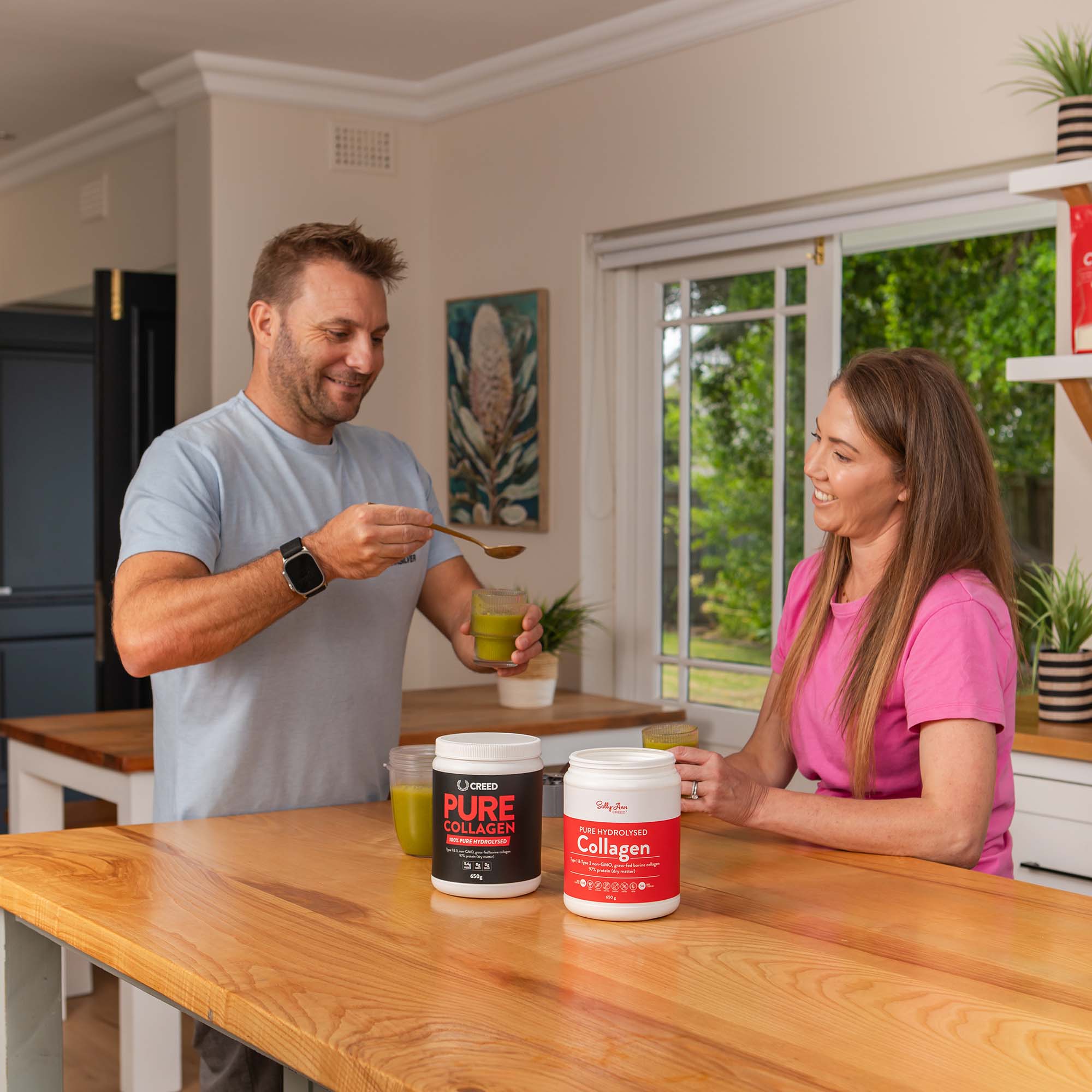
I’m repeating this post from March last year due to the huge popularity of this unique soup which has taken the country by storm. It’s my Skinny Collagen Soup – once you try it, you won’t want anything else – AND you get your collagen in at the same time – it’s made with Pure Hydrolysed Collagen. The weather in Cape Town is starting to get REALLY cold now, so soups naturally spring to mind to warm us. Unlike me, some people don’t like collagen in their coffee. I know. It’s crazy, and I can’t understand it at all. My husband is one such case, so I had to come up with a way to get my husband to take his collagen without him realising it (sneaky because men “always know better”…). I developed a pure collagen consommé just for him! And – one that won’t cause weight gain, in fact just the opposite. He absolutely loves it (and he is super fussy). The ‘instant’ stuff on the shelves is pretty toxic so either make your own thin soup/stock/broth and add my very Pure Hydrolysed Collagen, or take 1-2 spoons of my scrumptious Skinny Collagen Soup (SCS) and just add hot water! So easy! When I presented my husband with his first SCS with chopped fresh parsley from our garden sprinkled on top – that was it. I now have an addict on my hands. Mission accomplished! The other thing he loves to add to his SCS is a few squished pieces of celery so the juice is just detectable. But even without it – it’s a meal for anyone on the run, to quell hunger pangs while not putting on weight, and it’s so delicious you may want seconds. It’s a fabulous meal replacement when you are stuck (or want to lose some weight). Great for kids at school on a cold day in a food flask. But because it’s a powder, you can take it in your bag/case and just add hot water – it’s so easy for a quick lunch anywhere, any time, it’s totally natural and it has my own mixture of organic herbs and spices with collagen. Sometimes when we don’t feel like a big meal, just a salad, we’ll make ourselves a mug of SCS and have it as our “starter”. It blunts the appetite, provides us with superb quality protein and other excellent nutrition from the organic dried herbs & spices in my recipe, while still leaving room for our crunchy salad. You don’t have to wait for winter to try Skinny Collagen Soup – we didn’t . It fills you and is a great way of banishing hunger when a snack attack rears it’s ugly head. Sometimes in the evenings before bed we might have a mug of steaming Skinny Collagen Soup instead of tea, or in the afternoon if we feel like it at tea time – actually anytime will do…. It’s always a winner in our home. If you want to lose some weight (or NOT put on this winter!) have a cup of SCS instead of lunch, and take my BRILLIANT Berberine Complex and you’ll lose quite a few kilos while getting your body super-healthy in the process. Please share your experience with this soup – I’d love to hear. Stay warm in this cold weather!!! (originally posted on Facebook)
Read more
What are Functional Foods?
Have you ever wondered what people mean when discussing functional foods and nutraceuticals? Functional foods are food items or ingredients that exhibit additional health benefits to the body beyond simply supplying it with energy or fuel for functioning. Nutraceuticals are also functional foods as they are derived from food items but used in a medicinal manner in the form tablets, capsules or liquid to be of benefit to the body. Nutraceuticals are a group of products that are more than just food but are less than pharmaceuticals. Nutraceuticals is an umbrella term commonly used to describe any product derived from food sources that has additional health benefits over and above the foods basic nutritional value. Think about the word – “nutrient” (a nourishing food component) and “pharmaceutical” IE: more than food but not a medical drug. In many countries nutraceuticals are taken as part of dietary supplements. The philosophy behind nutraceuticals is to focus on prevention. Combining a food first approach with supplementation to support healthy outcomes. As the Greek physician Hippocrates (known as the father of medicine) aptly stated “let food be your medicine” and evidence strongly supports his thinking! Nutraceuticals as a term first originated in Japan in the 1980’s where nutraceuticals were developed to improve better health in the general population. These nutritious foods health benefits extend beyond the nutritional value. Some contain supplements and additional ingredients to improve overall health. They have multiple Health Benefits which include: PROTECT against disease Many are rich in anti-oxidants – These compounds help to scavenge and neutralise harmful molecules known as free radicals that lead oxidative stress – they help prevent cell damage and the development of chronic conditions (1) PREVENT nutrition deficiencies Which may be caused by an inappropriate diet Possible malabsorption due to chronic conditions PROMOTES growth and development Supplying the body with the correct nutrients in the correct amounts You get two types of functional foods or nutraceuticals (2) CONVENTIONAL AND MODIFIED CONVENTIONAL These are natural, whole food ingredients rich in nutrients such as vitamins, minerals, antioxidants and heart healthy fats. Examples of nutrient rich ingredients are: fruits, vegetables, nuts, seeds, grains, legumes, seafood, fermented food, herbs and spices and some beverages.If you consider oats as an example, oats are shown to reduce inflammation, enhance immune function and improve heart health. Oats also contains Beta-Glucan which is able to lower total cholesterol and reduce LDL (bad) cholesterol. (3) MODIFIED These are foods that are fortified with additional nutrients such as minerals, vitamins, fibre and probiotics. These foods that are fortified can include juices, dairy products, milk alternatives, grains, cereals and eggs. (4) Remember wholefood ingredients should make up 80-90% of your daily consumption. Stay away from sugar-containing products, refined carbohydrates and highly processed foods! Sources: https://www.ncbi.nlm.nih.gov/pmc/articles/PMC4644575/ https://www.eatright.org/food/nutrition/healthy-eating/functional-foods https://www.ncbi.nlm.nih.gov/pmc/articles/PMC5618555/ https://www.ncbi.nlm.nih.gov/books/NBK208880/
Read more
Are you eating enough Protein?
Here are some tell-tale signs you may not be getting enough protein in your diet. If you suspect you are not eating enough you can increase your meat, fish, eggs and poultry. Protein is essential to prevent muscle loss, and stay alive and well. Loss of muscle mass and decreased strength You are seldom full and snack constantly – protein keeps you satisfied for 5-7 hours without snacking You get hungry soon after eating a meal – if so eat more in that meal Anaemia – a sure sign of deficiency You struggle with energy levels, often feel tired and experience blood sugar highs and lows Are you often in a bad mood? It’s one sign of deficiency Do you have frequent infections/colds/flu, or do you stay sick longer without recovering? Do you have very weak/brittle finger nails and hair? Does your hair grow very slowly? Slow wound healing is a sign of protein deficiency You experience “stress fractures” – the body will ‘steal’ protein from your bones and organs if you don’t have enough proteinSo make sure you have plenty of healthy, clean protein (not the takeaway kind), with fresh vegetables and enough healthy fats to make you feel full and prevent snack attacks. You’ll feel so much better on more protein. Disclaimer: This post is subject to our general disclaimer https://sallyanncreed.co.za/disclaimer/.
Read more
Polycystic Ovarian Syndrome (PCOS) & Berberine
Polycystic Ovarian Syndrome: Your medical practitioner may not have heard of it but the natural medicine community is RAVING about Berberine for polycystic ovarian syndrome (PCOS). Many women with PCOS have a very poor response to insulin creating weight gain and hormone imbalance. The Metformin drug is usually prescribed. However studies have found that Berberine is as good if not much better than metformin. As it causes blood sugar and insulin levels to drop. This can result in ovulation for women with PCOS. One study also found that the women taking Berberine lost much more weight than the women on metformin. Win-win! The elevated testosterone associated with PCOS is the one hormone imbalance most women want addressed quickly as elevated testosterone in a woman leads to: Acne Head hair loss Chin and upper lip hair growth Berberine can speed the resolution of these symptoms. Berberine benefits the gut It is great for your ovaries and for your gut too. Berberine has been used for generations to treat symptoms of:• Gas• Bloating• Constipation and diarrhea• Supports healthy bacteria in the gut. Berberine loves your liver Your liver is essential in hormone balance. Berberine has been found in studies to increase the production of sex hormone binding globulin (that’s a mouthful…) or SHBG that binds to testosterone and makes it unavailable for use in your body in PCOS. It also lowers liver enzymes in non-alcoholic fatty liver disease, a condition that is commonly found in women who are overweight and have PCOS. Berberine benefits fertility In women with PCOS undergoing IVF procedures, those who took Berberine (no matter whether they were normal weight or overweight) had higher pregnancy rates than women using metformin or a placebo. Berberine boosts weight- and fat-loss Not every woman with PCOS is overweight. However, if you are even mildly overweight Berberine can help you shed some unwanted fat. Berberine has been found in multiple studies to support weight loss. Help target fat loss from the midsection of the body while it also helps to lower Leptin (our hunger hormone). Women with PCOS and women who are overweight often have abnormally high levels of leptin. Find this amazing nutritional supplement here https://sallyanncreed.co.za/product/berberine-complex/ Join our Instagram Page @SallyAnn_Creed and subscribe to our newsletter: https://sallyanncreed.co.za/subscribe. You’ll receive free food lists from The Low-Carb Creed when you join. This post is subject to our general disclaimer https://sallyanncreed.co.za/disclaimer/.
Read more
Does your hair need some help?
Try this Collagen Hair Mask! Apart from the amazing difference collagen makes over time to the thickness and lustre of your hair from the inside out. Here’s a way to give it that little extra boost using a Collagen Hair Mask. The shaft of your hair is porous, and will be able to absorb hydrolysed collagen, so give it a whirl, especially if you have colour-treated hair. Collagen strengthens the hair from the inside out as we know, but it also fortifies the entire shaft by forming a protective shield around each strand of hair, reducing breakage and protecting it from sun, heat and the environment when applied externally. Apply just once a month for nourished hair and scalp. Your hair will be soft and shiny! Here’s what you need for the Collagen Hair Mask: 2 tablespoons Sally-Ann Creed’s Organic Coconut Oil 2 tablespoons Sally-Ann Creed’s Organic Extra Virgin Olive Oil 1 tablespoon Sally-Ann Creed’s Pure Hydrolysed Collagen Here’s what you do with it: Mix all the ingredients together in a bowl until thoroughly blended. Apply to your entire head of hair, massaging into the scalp and applying it all the way down to the ends of the hair Leave on for 20 minutes. Shampoo and rinse well. Repeat shampoo, if necessary. NOTES Apply only once a month ONLY – and use our Pure Hydrolysed Collagen – don’t use any other kind of collagen, it may not work. Please let us know your results!!
Read more
What is Human Microbiome?
A microbiome is a community consisting of trillions of microorganisms (also called microbiota or microbes) of thousands of different species that inhibit our bodies. These also include bacteria, fungi, parasites and viruses. Inside and out, our bodies are home to a huge array of micro-organisms. Did you know there are more bacterial cells in your body than human cells? In a healthy body these all co-exist peacefully and the largest numbers are found in the small and large intestines. However having too many unhealthy microbes can lead to disease. The gut microbiome refers to all of the microbes in your intestines . These act as another organ that’s crucial for your health. Microbiota stimulate the immune system. They also break down potentially toxic food compounds and synthesize certain vitamins and amino acids. An imbalance of healthy and unhealthy microbes in the gut may contribute to weight gain, sleep disturbances, skin irritations and auto immune conditions. While a balance in gut microbes may help control blood sugar, positively affect brain health and lower the risk of diabetes. How can we ensure that we have enough microbiota and enough of the right types? In addition to family genes, environment, and medication use, diet plays a large role in determining the kinds of microbiota and more specifically which are best for optimum gut health! Here are 5 top tips to a happy gut 1. Eat a diverse range of foods including food rich in polyphenols which are broken down to stimulate healthy bacteria growth (found in green tea, olive oil and dark chocolate) 2. Probiotics: Eat fermented vegetables, like kimchi and sauerkraut, and pickled vegetables, like onions and gherkins which are a source of live cultures of bacteria like bifidobacteria and lactobacilli 3. If using an artificial sweeteners choose one that contains a prebiotic such as https://sallyanncreed.co.za/…/bio-sweet-prebiotic…/ 4. Take supplements that contain live active bacteria such as these: https://sallyanncreed.co.za/product/maxibiotic-20-vegicaps/ https://sallyanncreed.co.za/…/maxifos-prebiotic-powder…/ 5. Eat collagen rich foods such as bone broth or take pure hydrolysed collagen https://sallyanncreed.co.za/…/sally-ann-creed-collagen…/ Join our Instagram Page @SallyAnn_Creed and subscribe to our Newsletter https://sallyanncreed.co.za/subscribe/ receive free food lists from The Low-Carb Creed when you join. This post is subject to our general disclaimer https://sallyanncreed.co.za/disclaimer/.
Read more