"Gut health" is one of those phrases we hear everywhere these days. On social media, in wellness magazines, from friends, from doctors, and, we suspect, from anyone who has recently started drinking kefir.
It has become one of the most talked-about topics in nutrition, and yet, if we are honest, most of us still could not confidently explain what "the gut" actually is, or what a "microbiome" really does, or what the difference is between a prebiotic and a probiotic.
If any of that sounds familiar, this blog is for you. We would love to walk you through the basics of gut health without any jargon we do not explain first. By the end, you will have a proper map in your head of what your gut is, what lives inside it, and why so much of your health, from digestion to immunity to mood, is being shaped by what is happening in there.
The structure
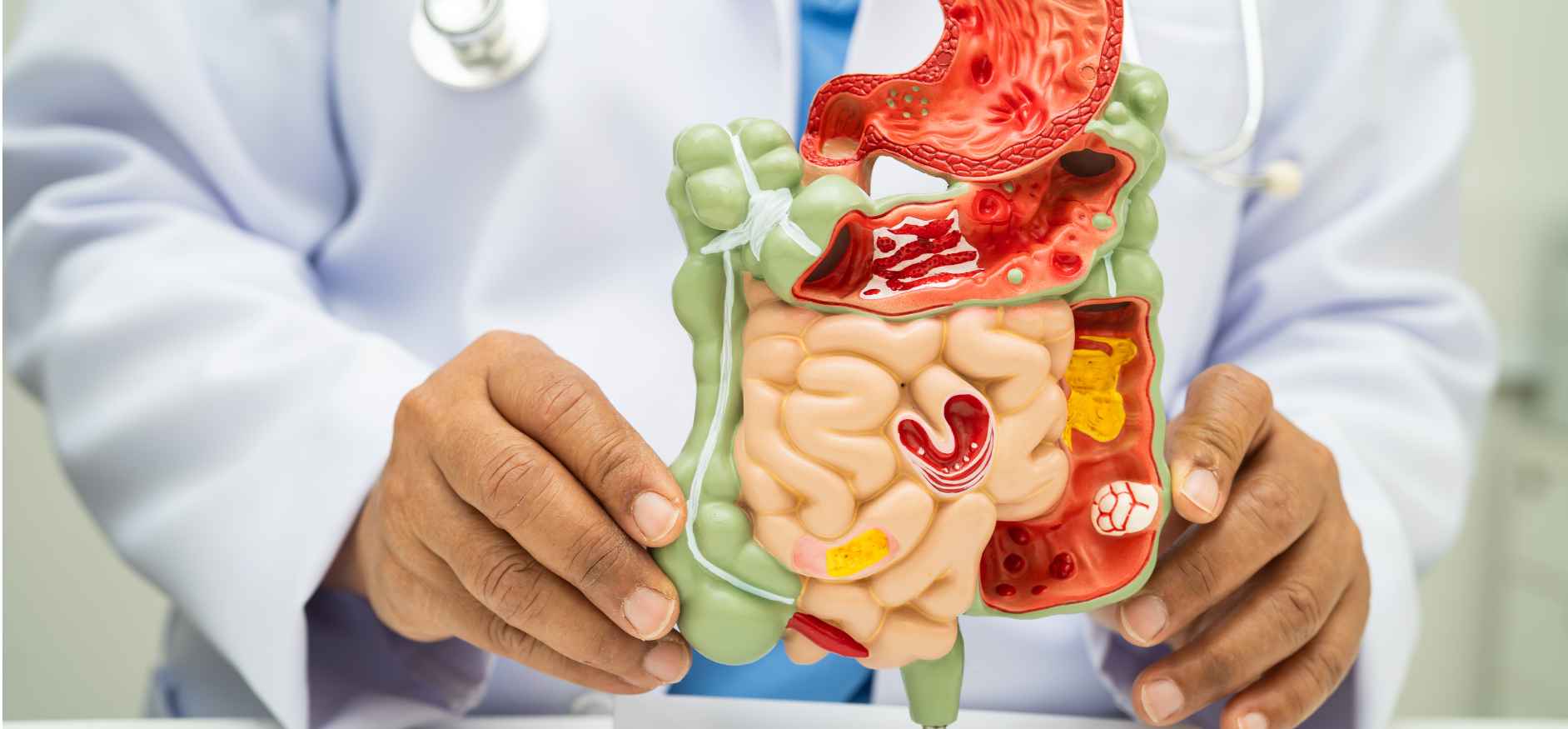
Your digestive system is the long, beautifully organised passageway that food travels through, from the moment you take a bite until the moment your body says goodbye to whatever is left. It stretches for several metres through the body, which is quite surprising given that all of it is neatly tucked into your torso!

Technically, the "gut" can refer to the whole gastrointestinal tract, from mouth to bottom. In fact, a 2026 international expert consensus defined gut health as "a state of normal gastrointestinal function without active gastrointestinal disease and gut-related symptoms that affect quality of life." When people talk about "gut health" in everyday conversation, however, much of the attention tends to centre around the intestines and the gut microbiome, most of which is concentrated in the large intestine.
The microorganisms
Inside you, right now, there are trillions of microorganisms. Bacteria, yes, but also viruses, fungi, and other tiny life forms. Most of them live in your large intestine. Together, they are called your microbiome, and they are one of the most extraordinary things about being human.

❤ Your gut microbes can weigh around 200g in total
❤ You carry around 38 trillion microbial cells in your body, comparable to the number of your own human cells
❤ The genes inside your microbiome outnumber your own genetic code by around 150 to one
❤ Every person's microbiome is entirely unique. Even identical twins have different microbiomes
These little tenants do far more than digest food. They make certain vitamins for you (like vitamin K and some B vitamins), they train your immune system, they produce compounds that talk to your brain, they help maintain the lining of your gut, and they ferment fibre into substances that keep the whole system healthy.
Which is why the phrase "trust your gut" turns out to be much more literal than we ever realised.
A little glossary of the words you might keep hearing
Microbiome and microbiota
Almost interchangeable, though technically slightly different. The microbiota refers to all the microbes themselves. The microbiome refers to the microbes plus their genetic material and everything they produce. In everyday conversation, both are used to mean roughly the same thing.
Probiotics
Live beneficial microbes that, when consumed in adequate amounts, can be helpful to your health. Found naturally in fermented foods like yoghurt, kefir, sauerkraut, kimchi and miso. Also available as supplements.
Prebiotics
The food that your gut microbes love to eat. Prebiotics are types of fibre and plant compounds that we cannot digest, but our microbes can. Found in foods like onions, garlic, leeks, asparagus, oats, bananas and legumes.
Postbiotics
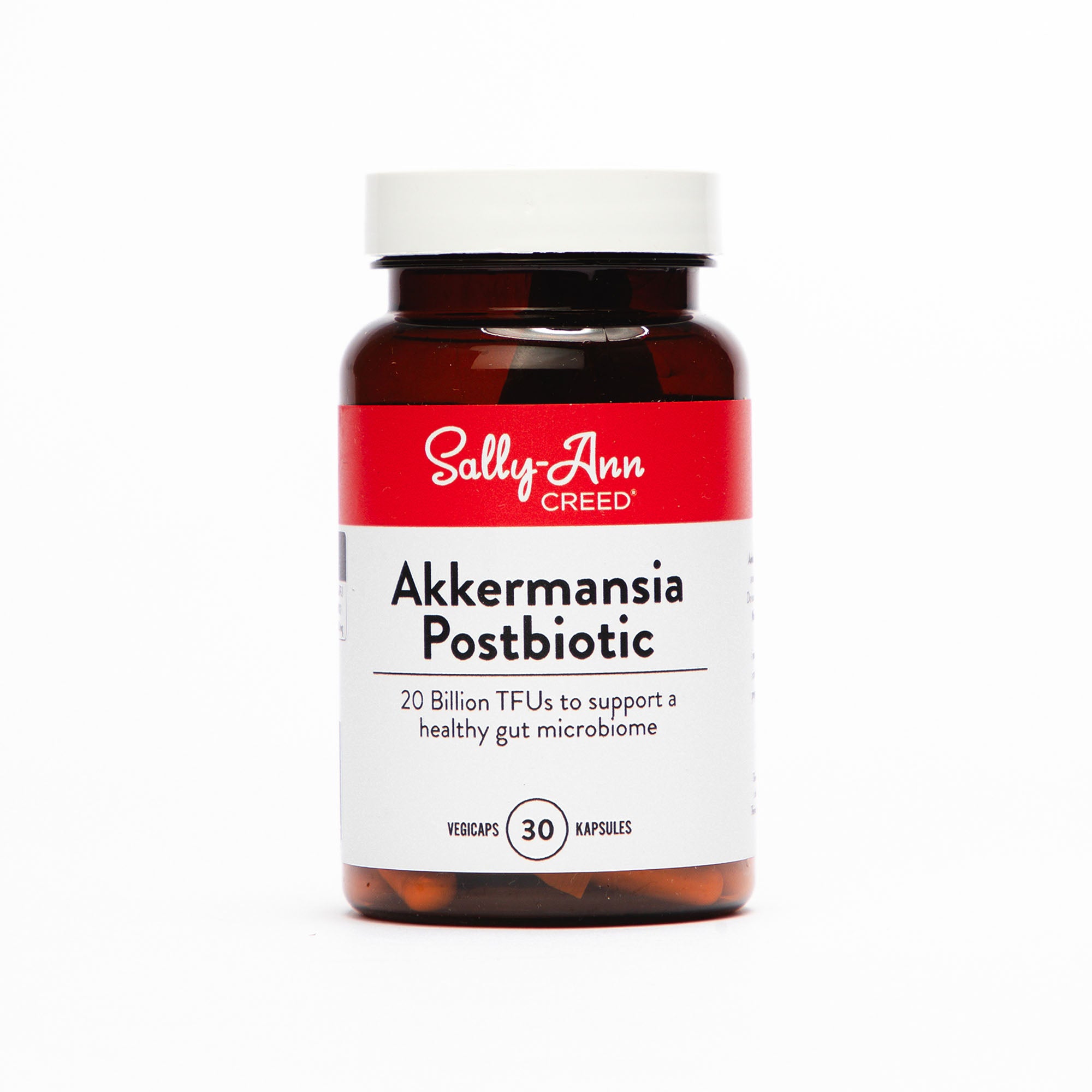
This can have two meanings. Postbiotics are inactivated microorganisms and/or their components or compounds produced by the microorganisms that have been shown to provide a health benefit. Unlike probiotics, the microorganisms themselves are no longer alive. This is the category that pasteurised or inactivated beneficial microorganisms can fall into eg Sally-Ann Creed® Akkermansia Postbiotic.
Synbiotics
Any product or food that contains both prebiotics and probiotics together. The idea is that you provide both the beneficial microbes and the food they need to thrive.
Fermentation
The process by which microbes break down carbohydrates in the absence of oxygen. It happens in your gut every day, and it also happens in the making of sourdough, yoghurt, wine, beer, kimchi and sauerkraut.
Short-chain fatty acids (SCFAs)
The beneficial compounds your gut microbes produce when they ferment fibre. Butyrate is the most famous one and is the preferred fuel source of the cells lining your colon. SCFAs are one of the main reasons fibre is so wonderful for you.
Intestinal permeability
The scientific term for how easily substances pass through the lining of your gut. A small amount of permeability is normal and necessary. When it becomes excessive, some researchers refer to it colloquially as a "leaky gut", though this is still an actively researched area rather than a formal medical diagnosis.
Dysbiosis
An imbalance in the microbial community, either too few of the helpful microbes, too many of the less helpful ones, or a loss of overall diversity. Dysbiosis is linked with a wide range of conditions from digestive discomfort to skin issues.
Gut-brain axis
The two-way communication system between your gut and your brain, largely via the vagus nerve, plus a network of hormones and immune signals. This is why your emotions can affect your digestion, and why what happens in your gut can affect your mood.
The vagus nerve
A long cranial nerve that connects your brain directly to your gut (and to most of your other organs). It is one of the main highways along which your gut and brain communicate.
Why any of this actually matters
The reason gut health has become such a huge topic is because researchers keep discovering that the gut influences so much more than digestion.
Immunity. A significant proportion of your immune system resides in tissue lining your gut, sometimes referred to as gut-associated lymphoid tissue (GALT). A well-supported gut microbiome helps train and regulate your immune response.
Mood and mental health. The gut and brain communicate continuously through what we now call the gut-brain axis, involving the vagus nerve, immune signals, hormones and microbial metabolites. Interestingly, most of the body's serotonin is produced in the gastrointestinal tract, although this serotonin does not directly cross into the brain. Researchers are continuing to investigate how the microbiome may influence mood, stress and mental health through these interconnected pathways.
Skin. Researchers are increasingly studying connections between the gut microbiome and inflammatory skin conditions such as acne, eczema and rosacea, an emerging area sometimes called the gut-skin axis.
Hormones. Certain gut microbes help metabolise oestrogen, which means gut health may play a subtle role in hormone balance, particularly for women.
Weight and metabolism. Emerging research suggests the microbiome influences how we extract energy from food, how full we feel after meals, and even our tendency to store fat.
Sleep and energy. Sleep and the gut microbiome also appear to have a two-way relationship. Studies have found associations between sleep patterns and differences in gut microbial communities.
Small, everyday ways to support your gut
The most powerful things you can do for your gut are almost embarrassingly simple.
Eat more plants, and eat more different plants. Diversity of plants supports diversity of microbes.
Include some fermented foods. A spoonful of sauerkraut with a meal, a small glass of kefir in the morning, or a serving of plain live yoghurt with breakfast can all help.
Feed the microbes with fibre. Prebiotic fibres from oats, legumes, onions, garlic, leeks and slightly underripe bananas are especially useful.
Cut back on ultra-processed foods. Highly processed foods tend to be low in fibre and high in additives that some research suggests can disrupt the microbiome.
Sleep and move. Both regular sleep and regular movement have been shown to positively influence the microbiome.
Be careful with unnecessary antibiotics. Antibiotics can be life-saving when needed, but they also disrupt the microbiome significantly. If you need them, they are worth taking. If you can avoid unnecessary ones, that helps.
Manage stress. Chronic stress genuinely affects gut function and microbial balance. Anything that supports your nervous system, like breathwork, time in nature, or good sleep, also supports your gut.
A little something from us
Because we love this topic so much, we have put together a range of gut-supporting supplements: a probiotic (live beneficial microbes), a prebiotic (the fibre that feeds them), and a postbiotic (an inactive form of a beneficial bacterium). Each one supports a different part of the same beautiful ecosystem, and they can be used on their own or together depending on what your gut needs.
Explore our range:
If you have any questions or want to learn more, please contact our dietitian at dietitian@sallyanncreed.co.za ❤
This article is for educational purposes only and is not intended to diagnose, treat or replace medical advice. If you have any concerns about your gut health or are managing a digestive condition, please consult a qualified healthcare practitioner before making significant changes to your diet or supplement routine.
References
1. Marco ML, Cunningham M, Bischoff SC, et al. The International Scientific Association for Probiotics and Prebiotics (ISAPP) consensus statement on the definition and scope of gut health. Nature Reviews Gastroenterology & Hepatology. 2026;23:432–448.
2. Salminen S, Collado MC, Endo A, et al. The International Scientific Association for Probiotics and Prebiotics (ISAPP) consensus statement on the definition and scope of postbiotics. Nature Reviews Gastroenterology & Hepatology. 2021;18:649–667.
3. Marco ML, Sanders ME, Gänzle M, et al. The International Scientific Association for Probiotics and Prebiotics (ISAPP) consensus statement on fermented foods. Nature Reviews Gastroenterology & Hepatology. 2021;18:196–208.
4. Ross FC, Patangia D, Grimaud G, et al. The interplay between diet and the gut microbiome: implications for health and disease. Nature Reviews Microbiology. 2024;22:671–686.
5. Loh JS, Mak WQ, Tan LKS, et al. Microbiota-gut-brain axis and its therapeutic applications in neurodegenerative diseases. Signal Transduction and Targeted Therapy. 2024;9:37.