Collagen, zinc and vitamin C
A closer look at the trio that work together
Collagen is the most abundant protein in your body. It holds your skin together, cushions your joints, lines your gut, supports your tendons and ligaments, and gives every connective tissue its strength and structure. It is, quite literally, the protein that holds you together.
You will often see claims that hydrolysed collagen is “instantly absorbed from the stomach.” That is not quite how it works, and the difference is quite important.
What collagen actually does, and where it goes
Hydrolysed collagen has already been pre-broken into smaller chains of two or three amino acids, known as dipeptides and tripeptides. These small fragments are then absorbed in the small intestine, not the stomach, where specialised peptide transporters carry them into the bloodstream.
From there, they travel through circulation and are taken up by collagen-rich tissues such as skin, joints and the gut lining, where they act as biological signals to your fibroblasts, the cells responsible for producing new collagen.
What are fibroblasts?
Fibroblasts are the cells that help make collagen. They are found in connective tissue and play an important role in keeping skin, joints, tendons and ligaments strong, supported and able to repair.
In other words, collagen does not magically rebuild your skin. It signals your body to do it. And whether your body is in a position to respond well to that signal depends on a few other things.
Do you need zinc to absorb collagen?
No, collagen supplementation or collagen from food will still be absorbed into your body, but zinc does play multiple, essential roles in the collagen story, and the science is fascinating once you understand it.
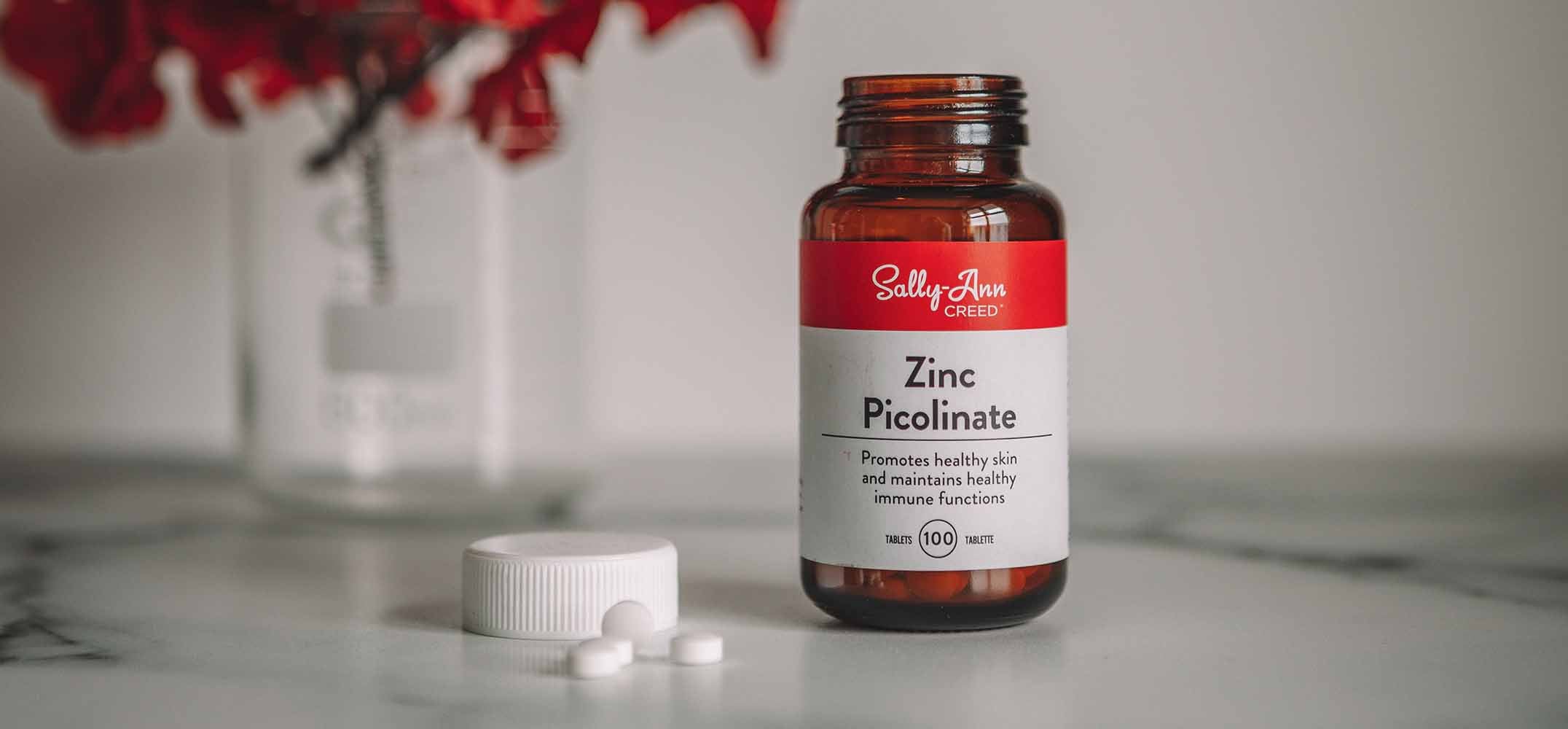
Zinc is a cofactor of an entire family of enzymes called matrix metalloproteinases, also known as MMPs. This sounds very complex, but basically these zinc-dependent enzymes are in charge of collagen turnover throughout the body. They help break down old, damaged collagen so that new collagen can replace it.
Without adequate zinc, this remodelling process may slow down. If we look at the science, recent dermatology research has shown how MMPs are central to skin ageing, particularly in the context of UV-related collagen breakdown.
But zinc does not only help break down old collagen. It is also important to fibroblast function and DNA synthesis, so your body can manufacture new collagen molecules in the first place. It also plays a role in wound healing, tissue repair and the production of stomach acid.
And that last point matters more than people realise. Adequate stomach acid is needed to digest dietary protein properly, including collagen from food. If zinc status is low, stomach acid production may also be affected, and that can affect the body’s ability to use the nutrients needed for healthy skin, hair and connective tissue.
Zinc helps your body break down old collagen, build new collagen, and support the repair process.
What about vitamin C?
Vitamin C is one of the most important nutrients for collagen production. Our body needs vitamin C to help turn collagen amino acids into strong, stable collagen fibres. Without enough vitamin C, collagen cannot form properly.
This is why severe vitamin C deficiency, known as scurvy, causes problems such as bleeding gums, fragile blood vessels, poor wound healing and weak connective tissue.
Importantly, vitamin C is not required for the absorption of supplemental collagen peptides. Those are absorbed independently and mainly in the small intestine. But once those amino acids and small peptides are in the body, vitamin C is needed to help turn them into proper, functional collagen.
Vitamin C also acts as an antioxidant. It helps protect existing collagen from oxidative stress caused by things like UV exposure, pollution, stress and normal everyday wear and tear. In this way, vitamin C supports collagen in two ways: it helps with new collagen formation and helps protect the collagen you already have.
Clinical research generally supports 200 to 500 mg daily for collagen support. Splitting that into two doses, such as morning and afternoon, may be more useful than a single large dose because vitamin C is water-soluble and the body absorbs it more efficiently in smaller amounts.
Collagen peptides provide building blocks. Vitamin C helps your body use those building blocks to make strong collagen.
The Sally-Ann Creed approach
Our approach is simple: food first, always, then targeted support where it is needed. Collagen, zinc and vitamin C each support a different part of the same bigger picture, which is helping your body maintain healthy connective tissue from the inside out.
Collagen peptides provide building blocks. Zinc supports repair and renewal. Vitamin C helps your body build strong collagen. ❤
References
1. Alberts A, Moldoveanu ET, Niculescu AG, Grumezescu AM. Vitamin C: A Comprehensive Review of Its Role in Health, Disease Prevention, and Therapeutic Potential. Molecules. 2025;30(3):748. doi:10.3390/molecules30030748. pmc.ncbi.nlm.nih.gov/articles/PMC11820684
2. Feng L, Liu D, Cheng L. Matrix Metalloproteinases on Skin Photoaging. Journal of Cosmetic Dermatology. 2024. doi:10.1111/jocd.16558. pmc.ncbi.nlm.nih.gov/articles/PMC11626319
3. Virgilio N, Schön C, Mödinger Y, et al. Absorption of bioactive peptides following collagen hydrolysate intake: a randomized, double-blind crossover study in healthy individuals. Frontiers in Nutrition. 2024;11:1416643. doi:10.3389/fnut.2024.1416643.
This article is for educational purposes only and is not intended to replace medical advice. Please consult a qualified healthcare practitioner for personal health concerns or before starting a new supplement.