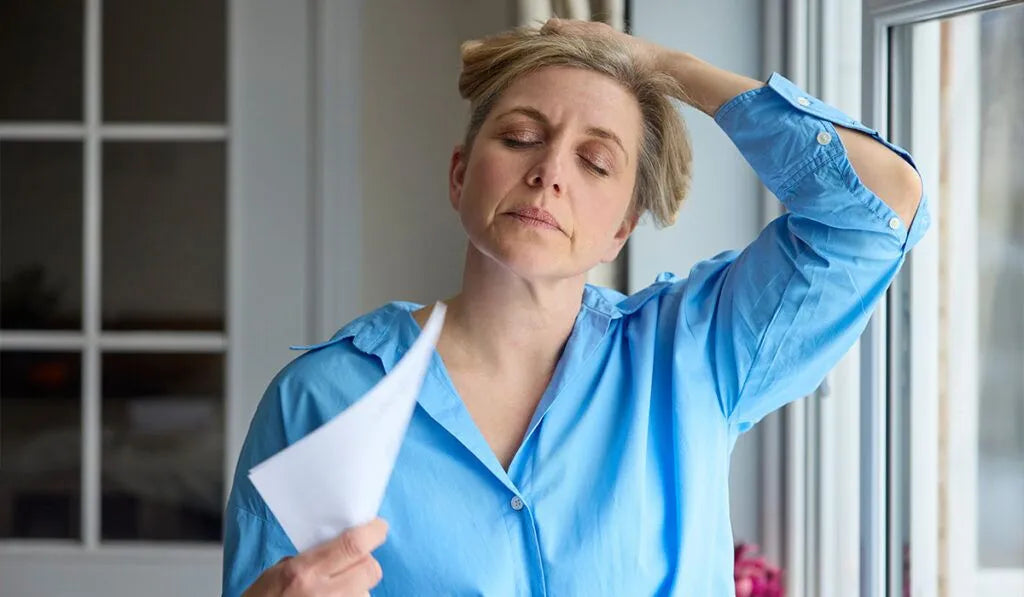
If you have found yourself thinking, “Why am I suddenly so hot?”,” Why am I waking up at 3am?” or “Why do I feel flat, foggy, irritable or just not quite like myself?” Please know that you are certainly not alone.
For many women, the years leading up to menopause can feel quite confusing. One month your cycle is normal, the next it is late. You may notice hot flushes, night sweats, poor sleep, mood changes, brain fog, itchy skin, lower libido or weight changes, and it can sometimes all feel as though it has come out of nowhere. The truth is that menopause is not usually one sudden event. It is more often a transition, and that transition can start years before your periods stop completely.
Menopause is the point at which you have gone 12 months without a period. The stage leading up to that is called perimenopause, and this is often when many of the symptoms begin. During this time, hormone levels, especially oestrogen, do not simply fall in a straight line- they can fluctuate up and down, which is part of why symptoms can feel so unpredictable. Menopause most commonly happens between the ages of 45 and 55, with the average age often cited as around 51.
Once perimenopause begins, because hormone receptors are spread throughout the body, the effects are not just limited to periods and hot flushes alone. One woman may notice sleep changes first. Another may feel suddenly more anxious, foggy or emotional. Someone else may notice skin changes, joint aches or weight shifts before they even think about menopause. That is part of what can make this stage so confusing. Why does it feel so different from woman to woman? Because it really is different from woman to woman. Some women have very few symptoms. Others feel as though they are asleep. Some women only notice changes in their cycle, while others experience a combination of hot flushes, night sweats, poor sleep, mood changes, forgetfulness, difficulty concentrating, pain during sex and joint or muscle pain. That is one reason why so many women say they did not realise they were in perimenopause at first. They were still having periods, or they expected menopause to only mean hot flushes.

The most common clue is usually a change in your cycle. Your periods may become more irregular before stopping altogether. Doctors usually diagnose menopause by looking at the whole picture ie your age, symptoms and changes in your menstrual cycle. In many women over 45, perimenopause or menopause can often be identified without routine blood tests, as hormone levels can fluctuate quite a lot during this stage. If symptoms begin earlier than expected, if periods stop at a younger age or if your doctor feels that something else may be contributing, they may suggest blood tests or further assessment. Depending on the individual, they may assess hormones such as oestradiol, progesterone, FSH, LH and testosterone, alongside other relevant blood tests (in some cases the DUTCH test). We have also put together a symptom checklist for you, which may help you connect some of the dots.
Changes in your cycle
- Periods becoming more irregular
- Periods becoming heavier or lighter
- Longer gaps between periods
- Periods stopping altogether
Temperature and sleep changes
- Hot flushes
- Night sweats
- Waking in the early hours
- Trouble falling asleep
- Feeling tired during the day
Mood and brain changes
- Feeling more anxious than usual
- Lower mood
- Irritability or a shorter fuse
- Mood swings
- Brain fog
- Forgetfulness
- Difficulty concentrating
Body and physical changes
- Joint aches or stiffness
- Muscle aches
- Headaches or migraines
- Palpitations
- Weight changes
- Fatigue or lower energy
- Dry or itchy skin
- Changes in hair texture or hair thinning
Intimate and urinary changes
- Vaginal dryness
- Discomfort during sex
- Lower libido
- Recurrent urinary discomfort or urgency
If you are nodding along to several of these, especially alongside changes in your cycle you may be experiencing perimenopause.
These are all recognised menopause-associated symptoms, and NICE includes menstrual changes, hot flushes and night sweats, mood effects, vaginal dryness, musculoskeletal symptoms and sexual difficulties among common symptoms. The NHS (National Health Service) also lists brain fog, palpitations, headaches, joint and muscle pain, skin changes, weight gain and reduced sex drive.
If you would like some help, this is a great website where you can click on your symptom, and a brief explanation on why it is happening is provided.
When should you speak to your doctor?
If your symptoms are affecting your quality of life, if your periods change significantly, if symptoms start earlier than expected or if you think you may be experiencing early menopause. It is also important not to assume that every symptom is “just menopause”. Thyroid issues, stress, low iron, poor sleep, medication changes and other health concerns can overlap with this stage of life, which is why choosing a doctor or healthcare professional who cares can be so helpful. This is also part of why good menopause care is not just about hormones, but about looking at the whole woman.
At Sally-Ann Creed, we are a woman-run, women-owned and women-focused company. Menopause education and support are very important to us. If you, or someone you know and love, needs nutritional guidance or help with where to go next, please feel free to contact us at admin@sallyanncreed.co.za