Articles


The science behind (and the truth about) our creatine
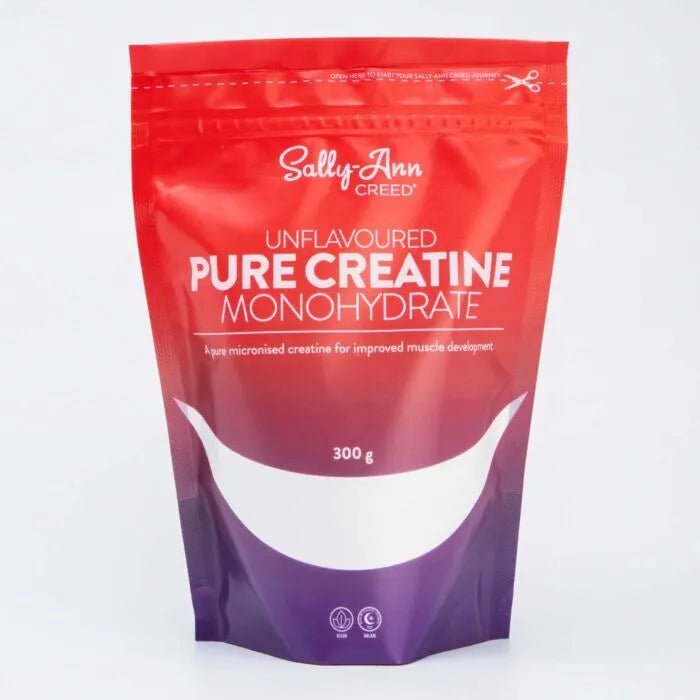
Here at Sally-Ann Creed, we hold purity and integrity as a core belief. It’s why we use only the best ingredients in our products, and rely on the latest science when offering our advice. Creatine as a product comes with some incorrect preconceptions, and we wanted to clarify some of these for you, especially as we’ve been getting some questions lately. There have been over SIX HUNDRED clinical trials involving more than 13000 people over the last 30 years testing the long-term efficacy and implications of taking creatine. After all these years, and after all these clinical trials have been conducted in humans on both healthy and medically managed populations, there have been NO adverse events reported. In one of the most recent metastudies (a study conducted using the results of other studies), it was found that “When the number of participants reporting side effects was considered from all studies, no significant differences were observed in the frequency of GI issues (PLA 4.05%, Cr 5.51%, p = 0.820), muscle cramping/pain (PLA 0.07%, Cr 0.52%, p = 0.085), or any other of the 33 side effects evaluated, including clinical markers of health and renal function.” In plain english, what that means is that there are no significant side effects from taking creatine. Any suggestion that creatine can cause these adverse side-effects is simply false. Our team has spent MONTHS researching the benefits and possible side-effects of creatine, and both our dietitian and food scientist have given it the big thumbs-up as the benefits (reduced brain fog, more energy, etc) are undeniable. Once we had done our research, we then spent weeks sourcing products from around the world. Because the quality and integrity of our products is so important to us, after much research and deliberation, we chose the purest creatine that we could find. Yes it comes from China, but it’s also as pure as that from Europe, but just more affordable, so that you as the consumer don’t need to pay an arm and a leg for the wonderful benefits of this product. We’re not ashamed of our suppliers, because they’ve been fully vetted and accredited, and always meet or exceed European standards. Our creatine is 99.9% pure. While some creatines may contain high levels of these harmful chemicals, our creatine contains virtually none, and is one of the cleanest creatines you can find: Diacyanimide: <0.005% Creatinine: <0.01% Dihydrotriazine: None Heavy metals: <0.001% FUN FACT: There have been claims that creatine was banned in France due to a cancer risk. The truth is that yes it was, but this was due to an opinion piece (not a clinical study) written by the AFSSA, which was later reversed after proper research proved that there was no proof that creatine caused cancer, and has been on sale ever since. In fact, a 2015 study looking at supplemental creatine of 7g per day for 7 days and then 5g for 23 days does not lead to increase of carcinogenic heterocyclic amines. “Individual analyses revealed that diet, rather than creatine supplementation, was the main responsible factor for HCA formation in these cases. This study provides compelling evidence that both low and high doses of creatine supplementation, given either acutely or chronically, did not cause increases in the carcinogenic HCAs”. The undeniable benefits of creatine: As women enter menopause, their oestrogen levels naturally decline, causing, among other things, brain fog. Creatine has proven to be an incredible way of countering this. People often mistakenly believe that because of this, creatine is a hormone regulator. The great news is that creatine’s positive impact on our brain function helps beat that brain fog, allowing us to better manage our menopausal brain fog and live life to the fullest. Creatine by itself does not cause mass gain. This is a common misconception caused by the fact that many bodybuilders use it as a means to increase their energy levels, and boost recovery. Without weight training, creatine will simply boost the levels of energy-boosting ATP in your body, allowing you to achieve more. As we mentioned at the start of this blog, we trust in science, and we want you to trust us too. We also understand that sometimes fear can be a barrier, so if you’d like to read more about creatine, you can browse over 20 studies listed on our creatine page here. Otherwise, please feel free to email us any questions you might have to our dietitian Carrie-Ann, who will be happy to answer any questions you might have, and hopefully put your mind at ease. All our love, The Sally-Ann Creed team
Read more
The truth about our Whey Protein Isolate
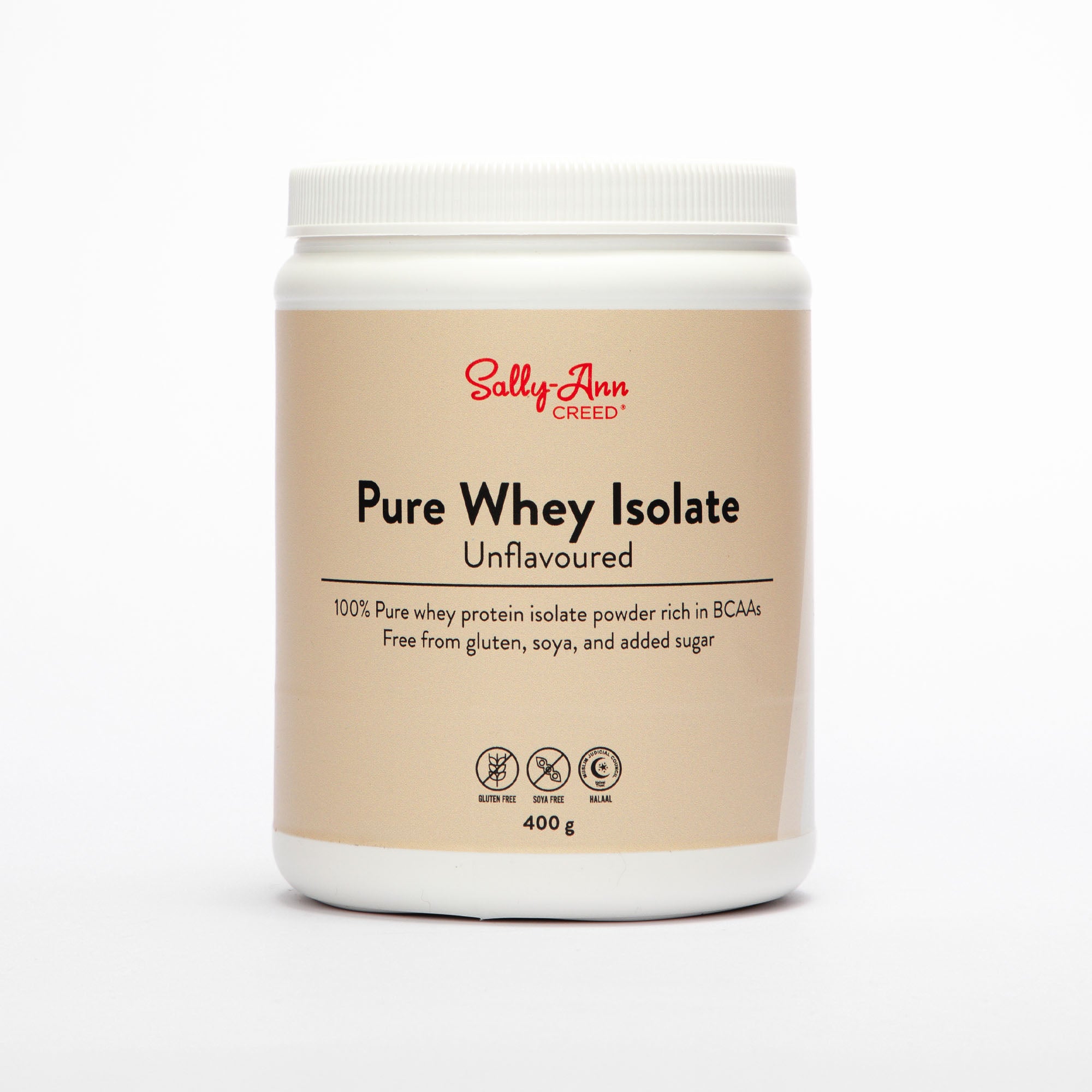
At Sally-Ann Creed we are passionate about bringing the best, clean and pure supplements to promote health and longevity to our clients. Let’s explain why our Best Whey Isolate stands out compared to others. We asked our dietitian to compare several popular whey protein powders on the market, and here’s what you need to know to make the best choice for your family. Whey protein is the by-product of cheese manufacturing (at Sally-Ann Creed we get ours from USA mozzarella production). It originally starts with cow’s milk which contains two types of protein—whey (80%) and casein (20%)—remember Little Miss Muffet?. During cheesemaking, enzymes are added to the heated milk which cause the casein in the milk to coagulate, or change to curd, separating from a liquid substance. The liquid substance is the whey which is further separated into the three types of whey. Side note: Both whey and casein are high-quality complete proteins, however casein is referred to as a “slow” protein due to its slow absorption and digestion whereas whey protein is much quicker to digest and higher in leucine. FUN FACT: Did you know that creatine is NOT a protein? It’s a compound that is naturally created to help provide energy to the cells in your body. It is used in conjunction with protein to promote muscle growth when combined with weight training. Pure protein with superior quality: Our Best Whey Isolate is made with only whey protein isolate sourced from quality mozzarella. Giving you a product that’s 86% pure protein. Compared to other products that range between 66% and 71% protein, we lead the whey. 😂 Why choose whey isolate? Ideal for those with lactose intolerance Absorbs quickly for faster recovery and body usage Contains minimal carbs (0g sugar) Per serving protein comparison: Creed Whey Isolate: 31g protein (86%) Best Whey Isolate: 20g protein (86%) Competitor 1: 23g protein (72%) Competitor 2:20g protein (69%) Competitor 3: 25g protein (65%) Clean, Minimal ingredients: We believe in keeping our products simple, clean and natural. The only ingredients in our Best Whey Isolate are whey protein isolate and sunflower lecithin. Absolutely no sugar, artificial sweeteners, flavourings or unnecessary fillers. In contrast, other brands include: Vegetable oils Sugars, syrups Artificial flavourings Preservatives Maltodextrin Natural Flavours: Our whey comes in two flavours: Unflavoured Chocolate—made with real, non-GMO cocoa powder for a natural, wholesome taste Unlike other products loaded with artificial flavours we wanted our customers to be able to customise their protein smoothies with alternative flavours from nature such as berries, nut butter or vanilla extract. Low-Carb Friendly: With 0g sugar and only 1.5g carbs per serving, our Whey Protein Isolate is perfect for those seeking a high-quality protein for daily use without the added unnecessary and unclean ingredients- because you deserve nothing but the best. Product Name Creed Whey Isolate (36g serving) Best Whey Isolate (24g serving) Product A (32g serving) Product B (38g serving) Product C (29g) Protein amount 31g 20g 23g 25.3g 19.6g Protein type Whey Protein Isolate Whey Protein Isolate Whey Protein Isolate, Whey Protein Hydrolysate, Whey Protein Concentrate Whey Protein Concentrate, Whey Protein Isolate, Whey Protein Isolate, Whey Protein Concentrate Carbohydrates 1.5g 1.2g 2.8g 7g 1g Flavours Plain and chocolate (cocoa powder) Plain and chocolate (cocoa powder) Cocoa, speckled eggs, milk tart etc Biscuit flavour, birthday cake, chocolate etc Vanilla Ingredients Whey protein isolate and lecithin (sunflower) Whey protein isolate and lecithin (sunflower) Protein blend (Whey Protein Isolate, Whey Protein Hydrolysate, Whey Protein Concentrate), Cocoa Powder (7 %), Flavouring, Sodium Chloride, Stabiliser, Non-nutritive Sweetener Blend (Sucralose, Acesulfame-K), Whey Protein Concentrate, Whey Protein Isolate, Cookie Crumbs (13,2 %) , Flavouring, Stabiliser (Xanthan Gum), Pink Himalayan Salt, DigeZyme® (Multi-Enzyme Complex), Non-nutritive Sweetener (Sucralose). Whey Protein Isolate, Whey Protein Concentrate, Cocoa Powder, Craftie Inuin, Fat Powder, MCT Powder, Stabiliser, Pink Himalayan Salt. Emulsifier, Non-nutritive Sweetener [Steviol Extract), Digezyme® (Digestive Enzyme Blend: Amyloses, Proteases, Lipases, Lactases and Cellulases)
Read more
What is Creatine?
Creatine is a naturally occurring compound that plays an incredibly vital role in energy production, especially during high-intensity activity or increased energy demand. It helps regenerate ATP (adenosine triphosphate) the body’s primary energy currency or, making it essential for movement, recovery, brain function and even healthy ageing. As humans, we get creatine from two sources: Endogenously: meaning the body produces it Exogenously: through dietary intake Creatine is synthesised in the kidneys, liver and pancreas from three amino acids: arginine, glycine and methionine, at a rate of around 1g per day. Once produced, it is transported to tissues with high energy demands, mainly skeletal muscle and smaller amounts are stored in the brain, heart and other organs, where creatine continues to support cellular energy metabolism. An omnivorous diet typically provides 1-2g of creatine per day, primarily from red meat fish and poultry (0.4-1g of creatine per 100g raw meat), In contrast, plant-based foods contain virtually no creatine, which is why vegetarians and vegans often have lower creatine stores and may benefit more noticeably from supplementation. Creatine has an incredibly neutral taste so is very easy to add into your schedule. At Sally-Ann Creed, we always advocate a food-first approach, but when it comes to creatine, supplementation can be particularly effective, especially for those who are plant-based, active or experiencing hormonal changes like perimenopause and menopause. One of creatines primary benefits is its ability to assist with cellular energy. Your body’s quick-burst energy comes from ATP- like a phone battery that drains quickly under load. When used, ATP becomes ADP, losing one phosphate. Phosphocreatine (PCr) acts like a portable power bank, donating a phosphate to recharge ATP. So by topping up your PCr stores, creatine helps your muscles, brain, heart and liver keep performing-delaying fatigue and improving energy output when you need it most. For her: Women naturally store and produce less creatine than men, which may affect energy, strength and recovery, especially during hormonal fluctuations like the menstrual cycle, perimenopause or menopause. Research shows creatine can: Support energy and mood during the luteal phase Enhance strength, tone and recovery Improve cognitive and physical performance without causing bulk The myth that creatine causes “bulky muscles” is unfounded. Most women experience better muscle tone and workout results, not unwanted size. Temporary water retention is mild and actually helps improve muscle performance. For active women or those navigating hormonal shifts, creatine offers real support for metabolism, energy and resilience-without compromising femininity. For him: Men often turn to creatine for the “big three”: strength, size and recovery and for good reason. A 2024 meta-analysis found that men supplementing with creatine gained an average of 4.4 kg in upper-body strength and 11 kg in lower-body strength over 4-12 weeks with resistance training. But that’s not all. Creatine also supports: Faster recovery between sessions Reduced muscle soreness and inflammation Improved bone strength via muscle loading and enhanced osteoblast activity
Read more
Creatine's resurgence as a womens health superpower
Creatine has come a long way. Once known mainly as a muscle-building supplement for bodybuilders and athletes, it’s now being recognised for so much more—especially when it comes to women’s health. From supporting brain function and bone strength to enhancing energy levels and resilience during perimenopause and menopause, creatine has been redefined and is experiencing a resurgence among a broader community. Creatine Monohydrate is one of the most popular and extensively studied supplements in the world. Literally HUNDREDS of clinical trials in humans have consistently demonstrated its safety and effectiveness, not just for exercise performance and muscle recovery, but recently for cognitive support, healthy ageing and bone health. The decades of research and a strong body of evidence have established creatine as one of the most studied and effective supplements for improving exercise performance. Authoritative professional health bodies, including the FDA and National Institutes of Health, recognise creatine monohydrate as a safe and effective nutritional supplement. After thoroughly reviewing the science and carefully studying the benefits, safety and broad advantages of creatine, our team knew we had to bring this incredible supplement to you. We’ve spent months researching and ensuring that it’s backed by evidence, not hype. We wanted to cut through the noise of social media and bring real science to the women (and men) we support every day. In short, creatine is not a steroid, not a gimmick, and certainly not just for men. What is creatine? Creatine occurs naturally in our body. Humans both create it in our body and obtain it through diet. Synthesised in the body from amino acids arginine, glycine and methionine (11)(1), creatine is created mainly in the kidneys, pancreas and the liver at a rate of around 1g a day. It is stored in tissues where there is a high need for energy such as the muscles, cells and brain. Because creatine has such an important role in energy production, 95% is stored in skeletal muscle (1)(2). In terms of getting creatine from your diet, an omnivorous diet contains around 1-2g/day of creatine. Creatine from your diet In terms of getting creatine from your diet, an omnivorous diet contains around 1-2g/day of creatine. Creatine is naturally found in animal-based foods, especially red meat, fish and to a lesser extent in poultry. Plant-based foods contain virtually no creatine, which is why vegetarians and vegans generally have lower creatine levels. At Sally-Ann Creed, we always advocate a food-first approach, however, in the case of creatine, supplementation may be more beneficial. For reference 100g raw beef contains approximately 0.9-1g of creatine, 100g raw pork provides around 0.6-0.9g, 100g raw chicken about 0.4g Cooking causes some loss of creatine, as it can degrade to creatinine (a less active compound) and boiling, frying or grilling can reduce creatine content by up to 30% depending on the cooking time and method (1)(10). If you would like to learn even more about this incredible product, visit our Creatine Reinvented page.
Read more
How to handle anxiety
Imagine you are a cavewoman (or caveman) and you are scanning the land, hunting your next meal. Suddenly you hear a rustle and it’s a lion! Now you’re running away, heart racing, sweaty palms, and your breathing speeds up-because your body feels you are in trouble and it’s using all its might to protect you. You’re not thinking about dinner anymore—you’re focused on survival. That exact response is anxiety, in its most ancient, primal form. It’s your body’s built-in “Panic! This is your alarm” system, and it’s designed to protect you from danger. Even today, thousands of years later, our nervous system is still wired the same way. The only difference really is that these days the lion has been replaced with a million Whatsapps, money stress, traffic, social pressure, kids schedules, and just life in general. This rush of fear or unease comes from a small part of your brain called the amygdala. It constantly scans your environment for threats, whether it’s real or imagined. When it detects danger, stress hormones like adrenaline and cortisol get released. These chemicals help you fight, flee or freeze, whatever it takes to survive the threat. The problem? In modern life, we don’t burn off that energy by running from predators. So we end up feeling the effects of anxiety which are tight chest, racing thoughts, digestive issues as examples without the resolution that physical danger used to bring. Stress is your response to external pressures like a work deadline or morning jam. It usually passes once the situation resolves. Anxiety however, is more persistent. It can feel like fear without a clear cause or it may linger long after the stressor is gone. A little anxiety is normal. It can even help sharpen your focus and keep you alert. But when it becomes overwhelming, chronic, debilitating, or interferes with daily life, it may be part of an anxiety disorder. Anxiety can look like this: Racing thoughts or spiralling worry Sleep issues Stomach upsets or digestive problems Muscle tension or headaches Feeling easily overwhelmed, irritable and/or disconnected So what can you do? There is some good news- just like you can train your muscles, you can train your nervous system. Here are a few little ways to help your body feel safe again: Breathe like a cavewoman at rest. Long, slow exhales activate your parasympathetic nervous system (your calm state). Try- in for 4 seconds, out for 6 seconds. Repeat for a few minutes when you feel anxious. Move your body. Your body was built to move! Movement is one of the best ways to burn off excess stress hormones. Walk, stretch, swim, dance or do any strength training to help your body get rid of any toxic stress. Eat to support your brain. Stable blood sugar = stable mood. Include healthy fats (yes, fats), fibre and protein in your meals. Nutrients like magnesium, B vitamins and omega-3s are especially calming for the nervous system. More on this below. Rest like you mean it. Your brain needs downtime. Good sleep, less screen time and real relaxation (not just scrolling) help regulate anxious thoughts Talk about it. You’re not alone. Therapy, journaling or chatting with someone you trust can shift anxiety from a chaotic swirl into something you can understand and manage. Often anxious thoughts feel like a messy, knotted ball of wool and talking them through to gently untangle the threads, turns these knots into a neat, soft ball of yarn you can actually work with. At Sally-Ann Creed we want you to know anxiety isn’t a flaw. It’s a feature of your beautifully protective, slightly overreactive brain. The same system that helped your ancestors outrun lions now needs your help adjusting to traffic, emails and deadlines. “Anxiety is not a disease-it’s a signal. Your body is trying to tell you something important: that you need safety, rest, or a change.” Dr. Nicole LePera, holistic psychologist Magnesium Why do you see “magnesium” everywhere you go or every time you open up social media? Is it the incredible nutrient that it’s played out to be? Absolutely!! It’s involved in over 300 enzymatic reactions It regulates cardiac rhythm Muscle movements, nerve function, DNA repair and so much more A few quick facts: Magnesium is stored in our bones (50-60%), muscles (30%) and in our brain and other tissues (10-20%). The recommended daily intake for females over 19 is 240-360 mg and for males is 240-420 mg. Pumpkin seeds, chia seeds, dark choc, spinach and beans and oats are all really nice sources of magnesium. But the focus of this article is on magnesium’s role in anxiety and stress, in particular how magnesium helps your body respond to and recover from stress. When you’re stressed (whether physically, mentally or emotionally) your body burns through magnesium more rapidly. Low magnesium levels can increase the production of stress hormones like cortisol, which in turn can worsen feelings of anxiety, fatigue and irritability. In fact, one fascinating study found that 45% of stressed individuals had a magnesium deficiency at baseline. Even more interesting? Magnesium deficiency symptoms and stress symptoms often look exactly the same. Anxiety, fatigue, low mood, irritability, tight muscles, poor sleep, all can stem from either stress or low magnesium or both. Low magnesium → more sensitive to stress → stress uses up even more magnesium → repeat. The sciency bit: Magnesium helps regulate the hypothalamic-pituitary-adrenal (HPA) axis of your body’s central stress response system. In other words, it helps you shift from fight-or-flight back into rest-and-repair. When your brain senses danger (even if it’s just traffic), your hypothalamus releases Corticotropin-releasing hormone (CRH) to tell your pituitary to make adrenocorticotropic hormone (ACTH) which tells your adrenal glands to release cortisol, your main stress hormone. Here’s where magnesium is really great: Magnesium calms the part of your brain that sounds the stress alarm, so your body doesn’t jump to full alert so quickly (Magnesium moderates NMDA receptors in the hypothalamus, so less CRH is released at the start of the cascade.) It helps your brain pass on the stress message in a more balanced way (In the pituitary, magnesium keeps cells from overreacting to CRH, preventing an oversized ACTH surge) Magnesium helps your adrenal glands release cortisol in a more measured way, avoiding a flood of stress hormones (t influences adrenal enzymes so cortisol release is more measured, not a full‑blown flood) It supports the feedback loop that tells your body, “Okay, danger’s passed you can relax now.” (By supporting glucocorticoid receptors, magnesium helps cortisol feedback work smoothly so your system shuts down the stress response faster.) Magnesium also supports your brain’s natural calming system (GABA), helping you feel more steady and less reactive. Magnesium helps your stress system respond appropriately (not excessively) and switch off sooner. That means fewer meltdowns, better sleep and more resilience in everyday chaos.
Read more
Net Carbs Explained
The concept of net carbs is based on the principle that not all carbohydrates are created equal. Some carbohydrates, like simple or refined starches and sugars, are absorbed rapidly and have a high glycaemic index, causing the blood sugar levels to spike straight after eating. Excess simple carbohydrates are stored in the body as fat. Other carbohydrates, such as the fibre-rich carbohydrates found in whole grains, fruits, and vegetables, move slowly through the digestive system, with much of them not digested at all. Another category of largely indigestible carbohydrates are sugar alcohols, such as erythritol, xylitol, and other polyols. These are modified alcohol molecules that taste like sugar, but don’t affect your blood sugar. These substances are commonly used as artificial sweeteners and sugar replacements. Calculation: In calculating net carbs, there are many formulas that you can use. In some diabetic education lessons, if the fibre is greater than 5g, you subtract half of the fibre amount from the total carbs along with any sugar alcohols. For example, if a product contains 20g of carbohydrates and 12g of fibre, the net carbs would be calculated as 20g – (12g ÷ 2) = 14g net carbs. However, this method may vary for individuals, as some people react to fibre differently. A more common method is to subtract the total amount of fibre and sugar alcohols from the total number of carbohydrates, as these types of carbs are thought to have minimal impact on blood sugar levels. For example, in a product containing 20g of carbohydrates and 12g of fibre, the net carbs would be 20g – 12g = 8g net carbs. Another formula involves only subtracting insoluble fibre from total carbs. The method used is solely dependent on how your body digests and reacts to fibre. You can choose how strict you want to be when calculating net carbs. Why this could be confusing The concept of net carbs can lead to some confusion. Everyone’s body responds differently to fibre and carbs, influenced by factors like genetics, activity levels, and health conditions. Plus, some companies use net carbs as a marketing tactic, making their products seem healthier than they really are. For example, a bar might claim to have only 2g of net carbs, but it could still contain 18g of total carbs. Because we like to adhere to a LCHF diet, we err on the side of caution and calculate using half the fibre value. In the end, while counting net carbs can be useful, for us, it’s more important to focus on the quality of the carbs you consume. Opt for a variety of high-fibre, whole-food sources that nourish your body and support your long-term health goals. Whether you’re counting carbs or not, the key is to choose foods that make you feel your best and contribute to your overall well-being. Everyone wants a quick list of really low carb fruit and veggies – well here it is! Use this ascending carbohydrate list and you won’t even have to think! These are one cup raw weight, including their skins (USDA): FRUIT Carbs Fibre Strawberries, whole (144g) 11.1g 2.88g Watermelon, diced (152g) 11.5g 0.68g Coconut, shredded (80g) 12.2g 7.2g Raspberries (123g) 14.6g 8g Apple 15g 2.62g Peaches (155g) 15.7g 2.32g Orange (sections) 21.2g 4.32g Blueberries (148g) 21.5g 3.55g Goji Berries (30g) dried 21.6g 3.64g Banana 34.2g 3.9g VEGETABLES Carbs Fibre >Spinach (30g) 1g 0.7g Lettuce (36g) 1g 0.5g Mushrooms (70g) 2.2g 0.7g Celery (101g) 3g 1.6g Zucchini, sliced (113g) 3.5g 1.1g Radish (116g) 3.9g <1.9g Cabbage, shredded (70g) 4g 1.75g Cucumber (120g) 4.4g 0.6g Aubergine (82g) 4.8g 3g Asparagus (134g) 5g 2.8g Cauliflower (107g) 5.3g 2.1g Broccoli (90g) 6g 2.5g Bell Peppers (100g) 6.65g 1.2g Green beans (100g) 7g 2.7g Tomatoes (180g) 7g 2.16g Brussel Sprouts (88g) 7.88g 3.34g Carrot (128g) 12.3g 3.58g Gem Squash, winter, acorn (140g) 14.6g 2.1g Onion(160g) 14.9g 2.72g Butternut (140g) 16.4g 2.8g Potato (150g) 26g 3g Sweet potato (133g) 26.7g 3.99g
Read more
What are carbs exactly?
Carbohydrates are one of the three macronutrients. They are organic compounds like sugars, starches, and fibers, providing energy for the body through glucose. You’ll find carbohydrates in dairy, fruit, vegetables, grains, beans and seeds. The majority of simple carbohydrates eaten eventually turn into glucose molecules after digestion, which is their simplest form. Glucose is then absorbed, transported around the body and eventually used by our cells, brain and muscles for energy. But not all carbohydrates are created equally. Understanding the different types of carbs, how they impact blood sugar levels, and their role in overall health and performance can help you make smarter dietary choices. For example, even though both an apple and a piece of chocolate contain sugar, they affect your body differently. The apple provides natural sugars along with fibre, vitamins, and antioxidants which slow down digestion and provide a more sustained release of energy. On the other hand, chocolate contains added sugars with little to no fibre, causing a faster and higher spike in blood sugar, followed by a crash in energy levels. Glycemic index This is why whole, fibre-rich carbohydrates like fruits, vegetables, and wholegrains are better for steady energy levels, while highly processed carbs and sugary foods can lead to short, quick energy bursts followed by fatigue. This is where the glycaemic index comes into play. This is a scale from 0 to 100 which rates different foods based on how they affect blood sugar levels. The higher the GI (closer to 100) the higher and quicker the effect on blood sugar levels. Lower GI Higher GI Fruits Whole fruits with skin: apples, apricots, peaches and plums • Fruit juices • Dried fruits • Canned fruits in juice: pineapple, watermelon, mango TIPS 💡Eat fruit with the skin on to lower GI 💡Fresh fruit is the best option 💡Strawberries, raspberries, blackberries and passionfruit have less carbohydrate compared to other fruits and have less effect on blood glucose levels. Vegetables • Non-starchy green vegetables: spinach, cabbage, kale, cucumber & lettuce • Most stirfry and salad ingredients • Starchy vegetables: potato, sweet potato, corn and carrots (cooked) TIPS 💡Eat potatoes with the skin on to lower their GI 💡Some semi-starch vegetables, eg: pumpkin, peas, carrot, parsnip, broad beans and beetroot have a higher GI value, but rarely increase blood glucose unless eaten in large amounts more than 200g. 💡Over-cooking vegetables can also increase the GI of the food. Raw carrots have a much lower GI impact compared to soft-boiled carrots. 💡By adding healthy fats and/or protein to higher GI foods, you slow the digestion of the food, therefore reducing the GI impact. 💡Cooking and then cooling a higher GI food, also reduces the glycemic index. 💡Adding vinegar, lemon juice or apple cider vinegar to higher GI vegetables also reduces the GI of the meal. While GI measures the effect of individual foods on blood sugar levels, in reality,we rarely eat foods in isolation. This is why most dietitians, however, recommend taking the glycaemic index with a pinch of salt. When fats, proteins, and fibre-rich foods are included in a meal, they slow digestion and modify the overall glycaemic response. Why do we still need carbs? Glucose from carbohydrates is the quickest and most efficient fuel for the brain and muscles. While the body can use fat and protein for energy, intense exercise, fast reaction times, and brain function still rely on some glucose. For low-carb eaters, the body can absolutely adapt to using fat (ketones) as fuel, as your body can rely on more fat for fuel. For sprints and long-distance ultra running, some carbohydrates may still be beneficial, depending on personal needs. For example, in short bursts e.g. sprints, if not properly trained, our body cannot break down fat and protein fast enough to supply energy to our muscles. Carbohydrate sources are also a lovely food group that can be rich in fibre and nutrients for our gut health and for a healthy microbiome. Eating low or no carbs isn’t always affordable or accessible for everyone, and so carbs shouldn’t be demonised or deemed unhealthy. Our philosophy is to embrace a balanced approach to nutrition, recognising that all food groups have a valuable place in a diverse and nourishing diet. By focusing on whole, nutrient-dense carbohydrates, we can support overall health and well-being while honouring individual needs and circumstances. What does 15g of carbohydrate look like? 🌾 1 slice of normal bread or 2-4 slices lower carb bread 🌾 1/2 cup of beans or lentils or chickpeas 🌾 1/2 cup cooked starchy vegetables 🌾 1/2 – 1 whole fruit or ½ cup fruit juice 🌾 ½ cup cooked pasta or grains or rice 🌾 ½ hamburger roll or ½ a large wrap 🌾 1/4-1/3 cup muesli 🌾 1/2-¾ cup breakfast cereal 🌾 1 cup milk or yoghurt Diabetes SA So how much fibre do I need a day? You can read more about fibre and its vital role in our diet in this blog post According to most guidelines: 25-35 grams of fibre per day for women and 35-38 grams of fibre per day for men From 30-50 grams of fibre per day for some individuals with type 2 diabetes and wanting to control cholesterol levels There we have it! All things carbohydrates! Whether you are on a keto or banting regime, or a carbo-loading endurance athlete, carbohydrates do not have to be seen only in a negative light. It’s about the balance, quality and nutritional composition that matters.
Read more
The facts about saturated fats
The current WHO guidelines on saturated fat are to keep them <10% of your daily calorie intake. The American Heart Association recommends even lower intakes of saturated fats, at <5-6% total calories. Historically, the health professional guidelines have always had straightforward messages: higher saturated fat levels equated to higher cholesterol levels, particularly LDL (low density lipoprotein), which correlated to cardiovascular disease. But the relationship is not as simple and clear-cut as they would like us to believe and here is why. What is saturated fat? Saturated fat, at a molecular level, is similar to monounsaturated fat, however these fatty acids are “saturated” with hydrogen atoms, meaning there are no carbon-carbon double bonds. This gives saturated fatty acids a straight structure, packed very closely together, and why it is solid at room temperature (as seen by the image above). Saturated fat’s stability is why this type of fat is important for certain biological functions (energy storage, cell membrane structure as well as the synthesis of certain hormones and signalling molecules). The basis of saturated fat getting its perceived bad reputation started in 1940 when the use of observational studies showed that groups who consumed high amounts of saturated fat had higher rates of death from cardiovascular disease. However, this study cherry-picked the results. Saturated fats can be found in animal products such as meat fats, lard, skin from meat such as chicken and other poultry, dairy products such as milk, cream, butter, coconuts and cheese as well as in some vegetable fats. Some experts are now debating the methods used in the early studies and debating whether different types of saturated fats could have individual effects on health or whether it’s not the saturated fat itself, but the total dietary intake that plays the biggest role in disease and cardiovascular health. For example there are several types of saturated fatty acids: Cocoa butter contains high levels of saturated fat, but if you scratch a little deeper, you discover it has a secret weapon. The fatty acids in cocoa butter are ~30% stearic acid, 30% oleic acid (an unsaturated fat), 25% palmitic acid, and ~5% Linoleic acid (another unsaturated acid). Because stearic acid actually DECREASES the LDL cholesterol levels, Cocoa butter has a neutral effect on our overall cholesterol levels, so you can enjoy this healthy saturated fat with complete peace of mind. Coconut oil is around 90% saturated fat, made up of 44% lauric acid and 16% myristic acid. While studies show that coconut oil does in fact raise our LDL cholesterol, it also raises our HDL cholesterol. A 2020 review from the American Heart Association showed that coconut oil consumption raised both LDL and HDL by 10.47 mg/dL and 4.00 mg/dL respectively, compared to other oils. For this reason, we always recommend using it in moderation, and preferably when on a LCHF or Keto diet. Palm oil is widely used in processed foods, and is high in palmitic acid—a type of saturated fat that has been shown to raise LDL cholesterol levels. Its extensive use in the food industry has raised concerns, as diets rich in processed foods with palm oil may contribute to heart disease over time. Dairy products like butter contain a mix of fatty acids. Though butter is high in saturated fat, recent studies suggest that moderate mindful consumption, especially of full-fat dairy, may not be as harmful as previously thought. Some research even points to possible benefits, such as reduced risk of diabetes and improved metabolic health, debates whether it is the saturated fat or actually the nutrients and fermentation (probiotics) that is the reason for this health benefit. What about red meat? Beef contains around 30% oleic acid monounsaturated fatty acid (the main fat in olive oil-known to assist cholesterol reduction) , 24% stearic acid (found in cocoa) and 26% palmitic acid (saturated fat also found in olive oil but with some studies suggesting it will raise LDL levels). While there have been studies that show that saturated fat can increase LDL levels, a protein that carries cholesterol in the blood, it is suggested that high levels of LDL can increase your chance of plaque forming in your arteries. Interestingly, on the other hand, a 2017 study, using 135 335 individuals dietary intakes with an average follow up of 7 years found that higher intake of saturated fats were associated with a lower risk of stroke, and “total fat and saturated and unsaturated fats were not significantly associated with risk of myocardial infarction or cardiovascular disease mortality.” Some questions that need to be considered are: Do saturated fats from grass-fed meat, nutritious dairy and natural coconuts have the same effect as saturated fats from processed foods and fast foods? We don’t think so. Does saturated fat only affect disease rates when it replaces certain foods and certain nutrients? For example if the same amount of monounsaturated fat is being consumed for heart health, will the saturated fat consumed have the same effect? We believe in balance and whole foods, with reduced refined and fast food. A varied diet rich in nutrient-dense, unprocessed ingredients to support overall health. Dr DL Katz, a nutritionist and physician with a speciality in internal medicine: “There is no one nutrient that’s responsible for all health ills, and there is no one nutrient that will make us healthy. It really is the overall dietary pattern. Dietary patterns consistently associated with good health tend to be low in saturated fat—but not because they focus on saturated fat—rather, it’s because they’re made up of the most nutritious foods preferentially. Those foods tend to be low in saturated fat just as they are low in salt and sugar and free of trans fat and so forth. Those foods are also minimally processed and close to nature, including vegetables, fruits, beans, lentils, nuts, seeds, and whole grains. There is no pixie dust involved. There is no magic formula, and there is no scapegoat. Wholesome foods in sensible combinations could be our salvation.”
Read more